
Understand the terms before using ETH at a casino
Ethereum payments involve wallet transfers, while acceptance, processing times and fees depend on the casino’s own terms.

What Ethereum Payments Mean for an Online Casino
When an online casino describes Ethereum as a payment method, it is referring to a cryptocurrency transaction rather than a card payment or a transfer through a bank-linked service. The relevant asset is ETH, the digital currency associated with the Ethereum network. In practical terms, a payment involves sending ETH from a crypto wallet to a destination specified for the transaction. That is the basic idea; it does not, by itself, tell you what an operator will accept or how it will handle a payment.
Crypto is sometimes presented as a way to move money quickly. General descriptions of cryptocurrencies such as Bitcoin and Ethereum refer to deposits and withdrawals as instant, with limited or no fees. Read that as a broad description, not a promise about every transaction or every casino. The wording does not settle how long a particular payment takes to appear in an account, whether a service applies its own charges, or what happens if a payment needs review. Those details depend on the terms attached to the service.
Choosing an Ethereum casino in Australia means checking the details that matter to you, including the available payment information and the operator’s stated licence. Use this list as a starting point, and confirm the terms for your preferred deposit method before playing.
-
WinSpirit Casino
- License
- Curacao eGaming OGL/2024/923/0383 (Antillephone N.V.)
- Min. deposit
- A$30
WinSpirit Casino lists a Curacao eGaming licence, OGL/2024/923/0383, issued by Antillephone N.V. Its stated minimum deposit is A$30.
-
Lucky Dreams
- License
- Curacao
- Min. deposit
- A$20 (POLi)
Lucky Dreams lists a Curacao licence and a minimum deposit of A$20 via POLi. Check the available payment options if you intend to use ETH.
-
Bizzo Casino
- License
- Curacao Gaming Control Board (TechSolutions Group N.V.)
Bizzo Casino lists a Curacao Gaming Control Board licence under TechSolutions Group N.V. The available information highlights its licensing details.
-
DragonSlots Casino
- License
- Curacao Gaming Authority (Jumpman Gaming Ltd)
DragonSlots Casino lists a Curacao Gaming Authority licence under Jumpman Gaming Ltd. Its stated licensing information is the key detail available here.
-
Vegaz Casino
- License
- Curacao OGL/2024/1335/0780
- Min. deposit
- EUR 20
Vegaz Casino lists Curacao licence OGL/2024/1335/0780 and a minimum deposit of EUR 20. Check the casino’s terms for the payment methods available to you.
-
Playfina Casino
- License
- Curacao eGaming (Hollycorn N.V., since 2017)
- Min. deposit
- A$20-30 (depends on the offer)
Playfina Casino lists a Curacao eGaming licence held by Hollycorn N.V. since 2017. Its minimum deposit is A$20–30, depending on the offer.
-
Wild Tokyo
- License
- Curacao
- Payout speed
- crypto 30-60 minutes, fiat 1-5 days
- Min. deposit
- A$10
Wild Tokyo lists a Curacao licence and a minimum deposit of A$10. Its stated payout times are 30–60 minutes for crypto and 1–5 days for fiat.
-
Rollero Casino
- License
- Curacao Gaming Control Board OGL/2023/176/0095 (Hollycorn N.V.)
Rollero Casino lists Curacao Gaming Control Board licence OGL/2023/176/0095 under Hollycorn N.V. The available information focuses on its licence.
-
LevelUp Casino
- License
- Curacao eGaming OGL/2023/174/0082 (Dama N.V.)
- Min. deposit
- A$15
LevelUp Casino lists a Curacao eGaming licence, OGL/2023/174/0082, under Dama N.V. Its stated minimum deposit is A$15.
-
Golden Pokies
- License
- Curacao
Golden Pokies lists a Curacao licence. The available information provides no further operator-specific details.
There is also a difference between the network and the casino’s account system. A crypto transfer can be sent using Ethereum, but the operator still has to recognise the payment and reflect it in the relevant account. The network label alone does not explain the operator’s processing steps. Nor does it establish that ETH can be used for every kind of transaction. A casino might describe a cryptocurrency option in general terms, while its actual account handling depends on separate conditions.
For that reason, “Ethereum payment” is not a complete description of the experience. It tells you which cryptocurrency is involved, but not necessarily how the amount is displayed, what conversion approach is used, or whether the account balance remains in ETH or is shown in another currency. Those distinctions matter because the amount sent and the amount credited are not automatically interchangeable concepts. The exact treatment needs to be stated by the service, rather than inferred from the word Ethereum.
The same care applies to the phrase “no fees”. A general claim about limited or absent fees does not prove that every step is free. There may be a difference between charges associated with a network transfer and charges that a payment service or operator might set. The headline description cannot answer that on its own. If you are trying to understand a particular payment, the relevant terms need to explain what the service counts as a fee and where it may apply.
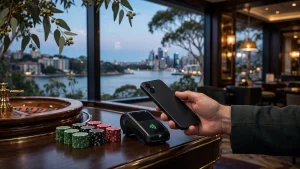
ETH is also not the same thing as a bank balance. It is a cryptocurrency held and transferred through a digital wallet, so a person considering it needs to understand that the payment path differs from tapping a card or choosing a familiar mobile wallet. That distinction is useful even before looking at any payment page: the presence of a cryptocurrency logo does not make a service equivalent to a bank or card provider, and it should not be treated as a guarantee of a particular level of consumer support.
Searches for an Ethereum casino in Australia can blur two separate questions: whether a site describes ETH as a payment option, and whether that service may lawfully provide online casino gambling to people in Australia. A payment method does not change the legal position. The Interactive Gambling Act 2001 prohibits operators from providing real-money online casino games to people in Australia, and the Australian Communications and Media Authority enforces the Act. Australian consumer law does not protect players who use offshore casinos. That is an important distinction, not a reason to treat an offshore payment option as an endorsement.
You may also see Ethereum discussed alongside mobile access or other casino features. Those are separate matters. The fact that a payment method is cryptocurrency does not establish how a site works on a phone, what services it offers, or whether any particular feature is available. Payment terminology should be read narrowly: it describes a possible way to transfer value, not a complete account of the service.
I would keep the central point simple. Ethereum is a cryptocurrency payment route, and broad descriptions associate it with quick transfers and limited or no fees. That description is not a transaction guarantee, a confirmation of any particular casino’s support, or a statement about Australian legality. The details matter.
Checking an Ethereum Casino’s Payment Information
A payment page can make a casino accepting Ethereum sound straightforward. The useful question is narrower: what do the operator’s own terms actually say about ETH, and do the cashier and the full payment rules agree? A coin icon or a broad “crypto accepted” label is not enough to establish how an Ethereum payment would work.
Start with the exact currency name. Look for Ethereum or ETH specifically, rather than assuming that a list mentioning cryptocurrency covers every coin. Check whether the payment information distinguishes ETH from other assets and whether it identifies the network to use. Ethereum is both the name of a blockchain and a currency commonly abbreviated as ETH; payment instructions need to make clear what they mean in practice. If the wording leaves you guessing, it has not given you dependable instructions.
Then compare the general payment page with the cashier information available to an account holder. The two should describe the same method and not contradict each other about whether ETH can be selected, what currency the account is credited in, or how a transaction is handled. A payment method mentioned in an old help article but absent from the current cashier is not a clear confirmation. Nor is a generic cryptocurrency logo that does not identify ETH.
Read the deposit and withdrawal rules separately. A page may describe one direction without explaining the other, so do not infer that a deposit method can also be used to receive a withdrawal. Look for the stated process for each transaction, including any conditions attached to sending or receiving funds. If the terms are silent on withdrawals, treat that as an unanswered point, not as permission to assume the same route works both ways.

Pay attention to how the operator describes fees and conversion. The relevant terms should tell you whether a charge may come from the operator, whether the account balance is converted into another currency, and how any conversion is calculated. These details matter even when a payment page uses simple language such as “crypto payments.” A statement that a transfer has limited or no fees does not, by itself, settle every possible charge or establish the cost of a particular transaction. Check the operator’s wording rather than filling in the gaps yourself.
The same care applies to transaction status. Find out what the operator says counts as a completed payment, how it describes pending or unsuccessful transfers, and what information it asks you to provide if a payment is not reflected in the account. The terms should explain the procedure in plain language. If they leave you unable to tell whether a transfer has been received or what to do next, that is a practical problem, not a minor wording quibble.
Check that the information is current and applies to your location. Payment options and terms can change, and a page written for another country may not describe the service available to someone in Australia. Look for a date or other indication that the material is maintained, and make sure the conditions refer to Australian customers rather than a different market. A page that uses Australian dollars elsewhere but gives no clear location-specific payment terms still leaves an important gap.
Do
- Specifically look for Ethereum or ETH in the payment terms
- Compare general payment pages with actual cashier information
- Read deposit and withdrawal rules as separate processes
Don't
- Assume a generic cryptocurrency logo confirms ETH support
- Infer that a deposit method can also be used for withdrawals
- Fill in gaps in the terms with your own expectations
It is also worth checking whether the operator gives a direct way to ask about unclear payment wording. Keep the question specific: ask whether ETH is supported for the relevant transaction, which network the instructions refer to, how the balance is credited, and where the applicable fees and withdrawal conditions are set out. A vague reply that repeats a marketing label does not resolve a specific uncertainty. Save the terms you reviewed, because a payment page can be changed after you have read it.
Searches for the best Ethereum casino site or an online casino with Ethereum often bring together claims that are not equally precise. Treat the operator’s current payment terms as the place to check the details, not a third-party description or a badge. Even an explicit mention of ETH does not establish that every payment route, account condition or transaction will work as you expect.
For Australians, there is a further boundary: online casino games cannot lawfully be offered to people in Australia under the Interactive Gambling Act 2001. Reviewing payment wording is not an endorsement or a recommendation to use an offshore casino. Australian consumer law does not protect players who use offshore casinos. Keep that context in view while assessing what a payment page says. A clear sentence on a cashier can answer a narrow question about the operator’s stated terms; it cannot make the wider risks disappear.
Choosing What Matters in an Ethereum Casino
“Best” depends on what you are trying to decide. You might be weighing whether a payment method fits your needs, looking for clear information, or trying to understand the risks attached to an offshore service. Those are different questions, and a single label cannot answer them all.

For people in Australia, the first consideration is the legal setting, not a casino’s features. The Interactive Gambling Act 2001 bars operators from providing real-money online casino services to people in Australia. The Australian Communications and Media Authority enforces the Act. The law does not make the player’s use of an offshore site a criminal offence, but that does not make the service lawful for the operator or safe for you. Australian consumer law does not protect people using offshore casinos. That is a serious difference, not fine print.
If you are comparing information about Ethereum payments, decide what matters to you before getting caught up in claims about convenience. You may want to understand which network a payment uses, how the service describes deposits and withdrawals, and whether it sets out any costs or restrictions. Those are useful questions to have in mind, but they do not establish that a particular site accepts ETH or that an advertised payment route will work for an Australian resident.
Clarity is another reasonable priority. Look for information that distinguishes a deposit from a withdrawal and explains what the operator expects from a customer. A polished page is not proof that its claims are reliable, and an Ethereum symbol beside a payment option is not a substitute for clear terms. If key details are hard to find or contradict one another, take that as a reason to pause rather than a puzzle to solve with a deposit.
- Confirm the specific network used for ETH payments
- Verify the stated process for both deposits and withdrawals
- Identify all potential operator charges and conversion fees
- Check if the terms specifically apply to Australian customers
You may also care about how much control you retain over your money and personal information. With any online service, consider what you would need to disclose, what might happen if a transaction is delayed or disputed, and whether you have a practical way to seek help. In the offshore casino context, the absence of Australian consumer-law protection matters when thinking through those risks. There is no clever payment method that removes them.
I would keep “latest” separate from “suitable”, too. A recently updated page can still leave important terms unclear; an older page may no longer describe current arrangements. The date alone tells you little about whether the information applies to your circumstances. A fresh-looking label is not due diligence.
It is tempting to combine payment method, bonuses and entertainment into one idea of the best Ethereum casino. They are separate considerations. A payment option does not establish what other features a service offers, and a promotion does not tell you whether the underlying service is lawful or offers meaningful consumer protections. Keep those questions apart. No shortcut there.
A useful personal checklist is modest: understand the legal context, decide what information you need, and do not treat a claim about ETH as proof of suitability. If your decision depends on details the operator has not made clear, you do not have enough to assess it. Sometimes the sensible choice is to stop.

Bonuses and Ethereum Deposits: Read the Conditions First
A bonus label can sound straightforward while leaving important questions unanswered. If you encounter wording about a welcome offer, a deposit bonus or a no-deposit bonus, treat it as a claim to verify in the full terms—not as proof that an offer is available to you or that an Ethereum deposit qualifies.
Start with the eligibility wording. Does it say which customers or locations qualify? Does it specify that deposits made in ETH are included, or does it describe a different payment method? A page that mentions a bonus and Ethereum separately has not necessarily connected the two. Look for explicit wording linking the payment method to the offer. If that wording is absent or unclear, do not assume the deposit will trigger anything.
Then read how the offer works, if one is described. Terms may explain how a bonus is credited, what restrictions attach to it and whether accepting it changes the conditions for withdrawing funds. Check whether the rules distinguish between deposited money and bonus credit, and whether they state any wagering requirement or other condition before a withdrawal can be requested. Do not fill gaps with expectations based on another site’s wording. The written terms are what matter.
Pay attention to the consequences of opting in. An offer may have conditions beyond the headline description, and those conditions can affect how funds are treated. Before accepting, look for language about withdrawal eligibility, excluded payment methods, and what happens if you decline or cancel the offer. If the terms do not explain a point that matters to you, that uncertainty is a reason to pause—not a reason to assume the most favourable interpretation.
The same care applies to claims about a bonus that requires no deposit. The label alone does not establish that an offer exists, that it is open to Australian residents, or that it can be used with ETH. Read the complete conditions rather than relying on a short promotional panel. “Free” is not a substitute for the rules attached to an offer.
Keep your records simple: save or note the exact terms you reviewed, including any wording about ETH deposits and withdrawals. If the cashier and the bonus terms appear to say different things, do not proceed on the assumption that one overrides the other. Seek clarification before making a financial decision, and keep a copy of any response. Small print is still print.
There is a larger issue behind any offer. Under Australia’s Interactive Gambling Act 2001, operators are prohibited from providing real-money online casino games to people in Australia, and the Australian Communications and Media Authority enforces the Act. Australian consumer law does not protect players using offshore casinos. A bonus does not change that legal position or make an offshore service safer.
So, assess bonus wording as a set of conditions, not as a reason to deposit. If the terms do not clearly answer whether ETH qualifies and what accepting the offer would mean for your funds, leave the offer alone. No guesswork.
Games and Payment Methods Are Separate Questions
A casino accepting Ethereum as a payment method would tell you something about how funds could be handled. It would not, by itself, tell you which games the service offers. Those are separate details, even when a page puts them side by side.

The phrase “Ethereum casino game” can mean different things. Someone may use it to describe a game found on a site that handles ETH, or a game built to interact with the Ethereum blockchain. Those descriptions are not interchangeable. A payment method does not show that a game runs on a blockchain, and a blockchain connection does not establish that a casino accepts ETH for deposits or withdrawals.
I’d keep the questions in separate boxes: what the payment terms say, and what the game information says. A cashier description concerns transactions. A game catalogue concerns entertainment content. Neither can stand in for the other. A page that mentions Ethereum near a game title may be describing the site’s payment options, not a special feature of that game. Small distinction; easy to miss.
This matters when reading claims about “playing casino games with Ethereum”. The wording may refer only to a payment route, rather than to games that use ETH within their mechanics. Likewise, a title being available on a service would not prove that it can be funded or played through a particular cryptocurrency arrangement. You need to read each claim for what it actually describes rather than letting the wording blur payment and content.
The same separation applies to general statements about Ethereum games. “Ethereum” can describe a currency, a network, or a feature someone claims a product has. Without clear wording, the label alone leaves room for several interpretations. It is not a reliable description of a game’s rules, software, or payment options.
For Australian readers, there is an important boundary around the subject: the Interactive Gambling Act 2001 makes it illegal for operators to provide real-money online casino games to people physically located in Australia. A payment label does not change that legal position. Nor does describing a game as blockchain-based turn it into a different category of service.
So treat references to ETH and references to games as distinct claims. One is about a payment method; the other is about content or how a product works. Don’t infer one from the other.
Before You Play: Check the Account and Payment Terms
An Ethereum payment does not remove the account checks attached to an online casino. Online casinos typically require customers to complete a Know Your Customer (KYC) assessment before financial transactions. In plain terms, you may be asked to verify who you are before money can move through an account. Do not treat a crypto option as a shortcut around that step.
Before opening an account or trying to make a payment, read the operator’s account terms alongside its payment rules. Look for what identity information is requested, how documents are submitted, and what happens if the details on your account do not match the information you provide. Those points matter before you rely on any payment route. A payment method being shown in a cashier does not, by itself, explain what account checks apply.
Check the rules for access, too. The terms should make clear who may register and whether any restrictions apply based on where a customer is located. Avoid entering personal or payment details until you understand those conditions. A vague answer is not a useful answer.
For an Ethereum-related payment, keep the account and payment questions separate. First, find out what verification the account requires before financial transactions. Then read the payment terms to understand how the operator describes the method. Neither point should be assumed from a label or logo in the cashier. If the terms are unclear about verification, eligibility, or how a payment is handled, pause rather than guessing.

It is also worth checking how to contact support about account verification and whether the operator explains how documents are handled. Use the operator’s own published terms for those answers, not a general claim about how crypto accounts work. KYC requirements are about the account holder; they are not proof that a particular payment method is available or that an account can be used from Australia.
I would read this before registering, not after a payment is pending. Keep the account requirements in view and do not submit information unless you understand why it is being requested and how it relates to the stated terms. If you cannot get a clear explanation, stop there. Better a pause than a guess.
Australian Rules and Offshore Casino Risks
The key point for anyone in Australia looking up an Ethereum casino is that the payment method does not change the legal position. Under the Interactive Gambling Act 2001, operators must not provide real-money online casino games to people physically located in Australia. That includes casino-style services offered through a website or mobile device, whether the account uses Australian dollars, Ethereum or another payment method.
The law is directed at operators, not explicitly at individual players using offshore sites. That distinction is worth understanding, but it is not an endorsement or a guarantee of safety. ACMA, the Australian Communications and Media Authority, administers enforcement of the Act. Offshore casino services may also be blocked from Australian access as part of enforcement.
I would not treat an offshore company’s claims about its location or foreign licence as a substitute for Australian protections. Australian consumer law does not protect players who use offshore casinos. If there is a dispute over an account or payment, you may not have the protections or remedies you would expect from an Australian service. A crypto payment does not create a local regulator, and it does not make a prohibited service lawful.
The Act sets substantial daily penalties for operators that break it: up to $360,000 for an individual and $1.8 million for a corporation. Those figures concern operators, not a stated penalty for a player. The Act does not explicitly make it a crime for a player to use an offshore site, but that should not be mistaken for approval by Australian authorities or a promise that an offshore service will remain accessible.
For that reason, a phrase such as “casino that accepts ETH in Australia” can blur two separate issues: a site may claim to handle Ethereum, while providing real-money online casino games to people in Australia remains prohibited for the operator. The payment option does not alter that legal context.
Be wary of language that presents offshore access as a normal local service or suggests that a foreign licence gives you the same standing as an Australian consumer. It does not. The practical risk is not only whether a payment goes through; it is also the lack of Australian consumer-law protection if something goes wrong. That is the part easy to miss.

Deposits, Withdrawals and What the Facts Actually Confirm
Cryptocurrency payments are often described as offering instant deposits and withdrawals with limited or no fees. Ethereum is included in that broad description. It is a general claim about crypto payments, though—not a promise that a particular casino will credit a deposit or release a withdrawal instantly.
That distinction matters when you see an “instant withdrawal” claim. The wording alone does not tell you how long an operator takes to review a request, whether it applies to Ethereum, or whether the receiving wallet will show the funds straight away. Nor does a general statement about limited fees establish what a particular service might charge. Payment speed and cost depend on the terms that actually apply to the transaction.
I would treat “fast” as a claim to check, not a figure. Without clear, specific terms, there is no sound basis for estimating a processing time or fee for an Ethereum withdrawal. The same goes for deposits: a broad description of crypto payments cannot confirm that an Australian-facing casino accepts ETH, or how it handles a deposit.
If you are reviewing payment information, look for separate explanations of deposits and withdrawals, the stated processing stages, and any fees. Check whether the wording refers to Ethereum specifically rather than cryptocurrencies as a group. If those details are not clear, an “instant” label does not fill in the gaps. Convenient headline; thin detail.
A search for a casino that accepts Ethereum deposits—or one promising a rapid ETH withdrawal—does not establish that any particular service offers either. And “no deposit” wording is not evidence of a payment feature or a confirmed offer. Keep those claims separate from what the payment terms actually say.
There is also an Australian legal context to keep in view: the Interactive Gambling Act 2001 prohibits operators from providing real-money online casino games to people in Australia. Australian consumer law does not protect players who use offshore casinos. A description of crypto transaction speed or fees should not be read as an endorsement or assurance about using such a service.
Live Dealers and Ethereum: No Verified Platform Details
A live-dealer table and an Ethereum payment option are separate features. A casino might describe its cashier as supporting ETH, while describing live tables elsewhere; neither statement establishes that the two are available together for Australian customers. Treat claims about an Ethereum-funded live-dealer account as something to check carefully, not as a feature you can assume from a general crypto label.
Read the wording closely. “Crypto accepted” does not tell you whether Ethereum is included, whether it can be used for deposits, or whether it is supported for the account you would use to access live tables. Likewise, a page about live dealers says nothing by itself about its payment methods. The practical detail is whether the operator’s own terms connect those features clearly.
Be wary of a broad label doing too much work. A site may use “live casino” to describe a category, but that does not identify the tables available, the conditions attached to access, or the payment route. A claim about a crypto casino should not be read as proof of Ethereum support specifically. Ask what the term covers before you rely on it.
I would also separate platform claims from marketing language. Look for current cashier information and terms that apply to Australian users, then check whether the live-dealer section has separate access conditions. If the wording is vague, contradictory, or only appears in a promotional banner, do not treat it as confirmation. Clear terms matter more than a tidy badge.

There is a further point for Australians: real-money online casino services, including live-dealer games, cannot lawfully be offered to people in Australia under the Interactive Gambling Act 2001. The Australian Communications and Media Authority enforces that law, and Australian consumer law does not protect players who use offshore casinos. A payment feature does not change that position.
So the phrase “Ethereum live dealer casino” bundles together two claims that need to be assessed separately: Ethereum payment support and access to live-dealer tables. Neither should be inferred from the other, and neither makes offshore play a protected option. Keep the distinction clear.
Ethereum Slots: Availability Cannot Be Confirmed
An Ethereum payment option and the availability of any particular game are separate matters. A reference to ETH does not establish that an operator offers slot-style games, or that a game can be accessed by someone in Australia. I would not treat a payment label as confirmation of either.
There is also a more important local issue. Under the Interactive Gambling Act 2001, operators are prohibited from providing real-money online casino games, including slots, to people physically located in Australia. The Australian Communications and Media Authority enforces the Act. A foreign licence does not make an offshore casino lawful to offer here, and Australian consumer law does not protect people who use offshore casinos. The law does not explicitly criminalise a player for using one.
So if you are trying to establish whether an Ethereum casino has games of this kind, a page making that claim is not a reason to use the service. Nor does the word “licensed” settle the question: Australia does not provide a local licence authorising real-money online casinos to serve residents. A claim about a foreign licence cannot change the Australian restriction.
I’d keep the distinction plain: ETH describes a possible payment method; it says nothing by itself about game availability, legality, or consumer protection. Don’t infer one from the other. No shortcut.
How do you check if casino sites accept Amex deposits?
Check the casino’s cashier for American Express and confirm that the payment option is available before entering your card details and deposit amount in AUD.
Which online casinos accept American Express for deposits?
Jackpot City Casino, Spin Palace, Ruby Fortune, Ignition Casino, Joe Fortune and PlayAmo are listed as operators that support Amex deposits for Australian players.
Why does my Amex deposit get declined at some casinos but not others?
Amex or your Australian bank may block gambling transactions to a particular website, and some casinos do not accept American Express.
Do I need to verify my American Express card before using it for online casino transactions?
Online casinos typically require you to complete a Know Your Customer assessment before making financial transactions.
What are the fees involved with American Express payments?
Amex deposits typically have no fees, but a casino may add a 1.5% surcharge, and Amex cards incur a 3% currency conversion fee. Withdrawal fees may also apply.
Can I withdraw winnings directly to my American Express card?
Some casinos allow it, but not all; you generally need to have deposited with Amex first. Amex casino withdrawals can take up to five days to clear, and fees may apply.
What should I do if my American Express deposit is declined?
Check whether Amex or your Australian bank is blocking payments to that website, and confirm that the casino accepts American Express deposits.