
Check the payment claims before relying on them
A payment method does not establish legality, game coverage or a usable withdrawal route for an online casino.
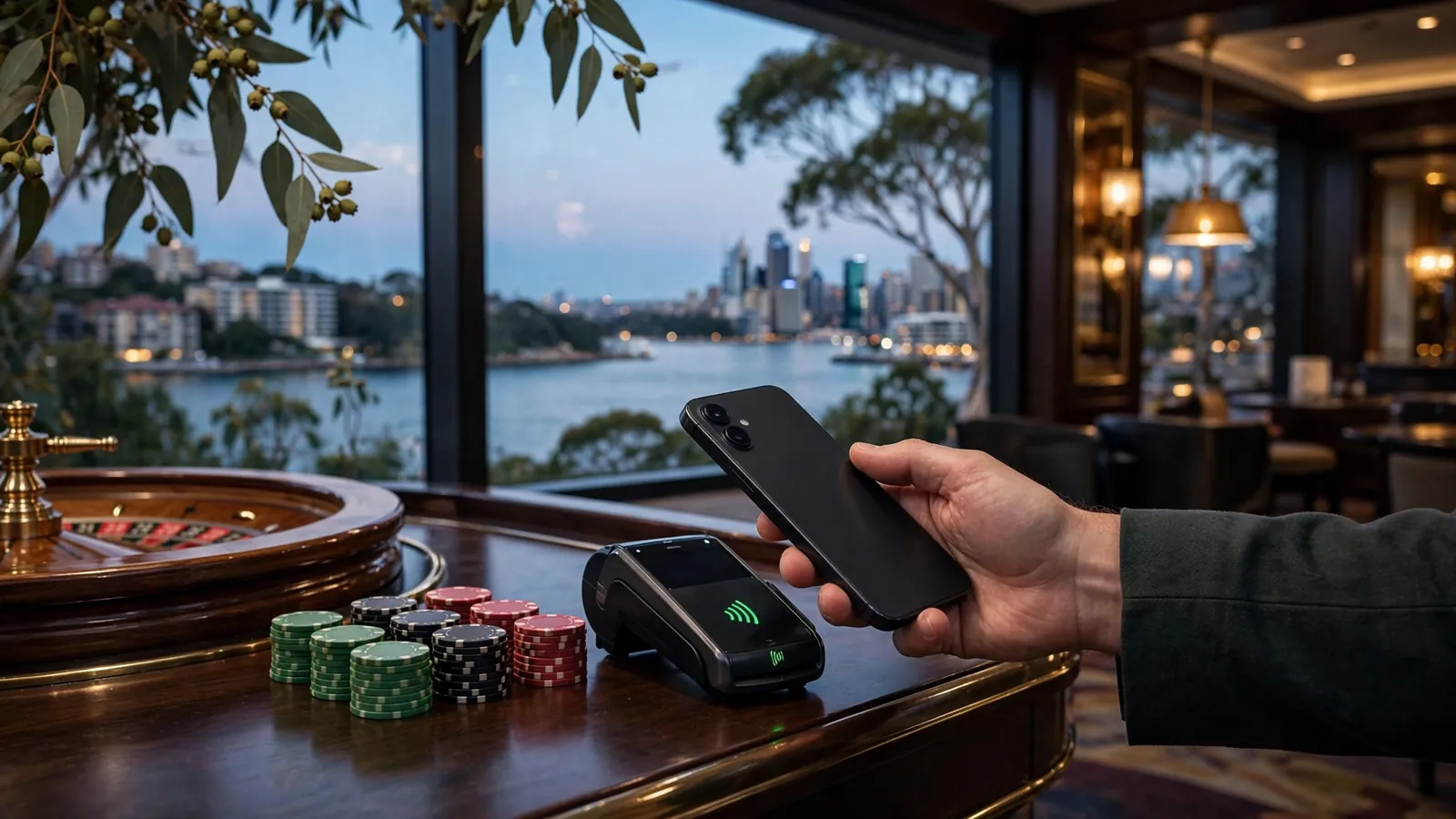
Google Pay and Online Pokies: The Australian Context
When people look for online pokies that take Google Pay, they are often trying to answer a straightforward payment question: can a mobile wallet be used at an online casino? In Australia, that question sits inside a more important legal context. A payment option does not make an online casino lawful, and mentioning Google Pay should not be read as a recommendation to use an offshore gambling service.
The Interactive Gambling Act 2001 makes it illegal for operators to provide real-money online casino games to people in Australia. That includes casino-style games such as pokies, poker and table games. The law is directed at the operators providing the service; it does not explicitly make an Australian player’s use of an offshore casino a criminal offence. The distinction matters, but it is not an endorsement or a signal that playing is protected.
The Australian Communications and Media Authority, known as ACMA, administers enforcement of the Act. Its role concerns the rules on prohibited interactive gambling services. A site’s payment page, branding or apparent availability does not alter those rules. Nor does a wallet brand’s presence on a cashier establish that the operator is permitted to offer real-money casino games to people located here.
Choosing a casino that accepts Google Pay in Australia means checking the payment details that matter to you before signing up. Use these short verdicts as a reference, and verify current Google Pay availability directly with each casino.
-
WinSpirit Casino
- License
- Curacao eGaming OGL/2024/923/0383 (Antillephone N.V.)
- Min. deposit
- A$30
WinSpirit lists a Curacao eGaming licence, OGL/2024/923/0383, issued through Antillephone N.V. Its stated minimum deposit is A$30.
-
Lucky Dreams
- License
- Curacao
- Min. deposit
- A$20 (POLi)
Lucky Dreams is listed as Curacao-licensed, with a minimum deposit of A$20 when using POLi.
-
Bizzo Casino
- License
- Curacao Gaming Control Board (TechSolutions Group N.V.)
Bizzo Casino is listed under the Curacao Gaming Control Board, with TechSolutions Group N.V. identified as the operator.
-
DragonSlots Casino
- License
- Curacao Gaming Authority (Jumpman Gaming Ltd)
DragonSlots Casino is listed under the Curacao Gaming Authority, with Jumpman Gaming Ltd identified as the operator.
-
Vegaz Casino
- License
- Curacao OGL/2024/1335/0780
- Min. deposit
- EUR 20
Vegaz Casino lists Curacao licence OGL/2024/1335/0780. Its stated minimum deposit is EUR 20.
-
Playfina Casino
- License
- Curacao eGaming (Hollycorn N.V., since 2017)
- Min. deposit
- A$20-30 (depends on the offer)
Playfina Casino is listed as Curacao eGaming-licensed, with Hollycorn N.V. identified as the operator since 2017. Its minimum deposit is A$20–30, depending on the offer.
-
Wild Tokyo
- License
- Curacao
- Payout speed
- crypto 30-60 minutes, fiat 1-5 days
- Min. deposit
- A$10
Wild Tokyo is listed as Curacao-licensed and has a stated minimum deposit of A$10. Payouts are listed as taking 30–60 minutes for crypto and 1–5 days for fiat.
-
Rollero Casino
- License
- Curacao Gaming Control Board OGL/2023/176/0095 (Hollycorn N.V.)
Rollero Casino lists Curacao Gaming Control Board licence OGL/2023/176/0095, with Hollycorn N.V. identified as the operator.
-
LevelUp Casino
- License
- Curacao eGaming OGL/2023/174/0082 (Dama N.V.)
- Min. deposit
- A$15
LevelUp Casino lists Curacao eGaming licence OGL/2023/174/0082, with Dama N.V. identified as the operator. Its stated minimum deposit is A$15.
-
Golden Pokies
- License
- Curacao
Golden Pokies is listed as Curacao-licensed. No further operator details are provided here.
There is another point worth keeping clear: Australian consumer law does not protect players using offshore casinos. If a dispute arises over an account, a payment or winnings, you should not assume that the safeguards available in an Australian consumer transaction apply. Offshore operators may present terms and support channels, but that is not the same as Australian consumer protection. A tidy cashier can make a transaction look ordinary. The legal position is not.
That is why searches for an Australian online casino accepting Google Pay need careful interpretation. “Australian” may describe the person searching, the currency shown on a page or the audience an operator claims to serve. It does not establish that the casino is licensed under Australian law or legally allowed to provide online casino games here. Likewise, a site using familiar payment branding does not acquire local status through that branding.
Google Pay itself is a payment method, not a regulator and not a guarantee about what happens after a payment is submitted. Even if a casino page displays a mobile wallet, that would answer only a narrow question about a payment interface. It would not make the underlying gambling service lawful, provide Australian consumer protections, or confirm the operator’s responsibilities under Australian law. Keep those questions separate.

I would treat the phrase “accepts Google Pay” as a claim about a particular cashier, not a safety signal. A wallet logo can be easy to recognise; its presence says nothing on its own about who operates the site, where the operator is based, or what remedies you would have if something went wrong. Those are separate issues, and the Australian legal framework makes them especially important for anyone considering an offshore service.
In Australia, the law prohibits operators from offering real-money online casino games to local customers, while the player position is distinct: the Act does not explicitly criminalise a person for using an offshore site. Neither point should be blurred into a claim that offshore play is lawful or protected.
If you are reading a cashier page, remember what it can and cannot tell you. It may describe a payment route, but it cannot change the legal status of the service or give you Australian consumer-law protection. The operator’s presentation is not the same as an Australian regulator’s approval. That is the context to keep in mind before treating a Google Pay label as meaningful reassurance.
What to Check Before a Google Pay Deposit
Before you start a payment, pause at the cashier and check what it actually offers for your account. A Google Pay logo elsewhere on a site, or familiarity with using a mobile wallet in Australian shops, does not tell you what will appear when you reach the payment screen. I would treat the cashier as the point where you confirm whether the option is available, rather than assuming it will be there.
- Confirm Google Pay is listed as an available method in your account cashier
- Complete all outstanding identity and account verification checks
- Verify the deposit amount and currency on the payment screen
- Check for any stated fees or additional conditions before submitting
If Google Pay is not shown as an available deposit method, do not try to force the transaction through another option or assume the wallet can be added later. If it is displayed, read the information presented alongside it before submitting anything. Make sure you understand the amount and currency shown, and look for any stated fee or other condition. If an important detail is missing or unclear, stop and seek clarification rather than guessing.
Check your account first
Online casinos commonly ask customers to complete identity checks before they can carry out financial transactions. That means it is sensible to look at the account’s verification status before attempting a deposit. If the site says that checks are outstanding, read its instructions and complete the requested steps through the account itself. Starting a payment while account checks are unresolved can leave you unsure about what happens next.
Use consistent, accurate account details. If information in your profile differs from what you provide during a verification process, the operator may need to resolve the discrepancy before proceeding. I would not submit payment details until I could see that the account information was complete and that I understood any pending verification request.
Be careful with requests for personal or financial information. Follow the operator’s stated process, and do not send sensitive details through an unrelated message or channel simply because someone claims it will speed things up. If you are uncertain whether a request is genuine, pause and contact the operator using contact information available through its own account or website.
Review the payment screen before submitting
Once you reach a payment screen, take a moment to read it from top to bottom. Confirm that the selected method is the one you intended to use, that the amount is the amount you meant to enter, and that the currency is clear. Look for any fee or conversion information shown before you approve the transaction. Do not rely on what you remember seeing on a previous visit; screens and account conditions can change.
If the cashier asks you to confirm a payment in a separate wallet or banking interface, compare the details there with what you entered on the casino site. If the amount, recipient, or other information does not match, do not approve it. A familiar logo is not a substitute for checking the transaction details.
Keep a record of what the cashier displayed and any confirmation you receive, without exposing private account information. That can help you describe the issue if a transaction is declined, delayed, or shown differently from what you expected. Do not repeatedly submit the same payment simply because the first attempt does not produce an immediate confirmation; first check the transaction status and contact support if necessary.
Set a clear stopping point
Decide in advance what you are willing to spend, and do not treat a payment method’s presence as a reason to deposit. A wallet can make a transaction feel routine, but the decision still involves real money. If the cashier’s terms are unclear, the account is not ready, or you feel pressured to continue, leave the payment screen.
There is also an important Australian legal context. The Interactive Gambling Act 2001 makes it unlawful for operators to provide real-money online casino games to people in Australia. Australian consumer law does not protect players who use offshore casinos. A payment option appearing on a screen does not change either point, and this checklist is not a recommendation to use an offshore casino.
The practical check is simple: confirm the method is actually presented for your account, make sure your account checks are complete, and read the payment details before deciding whether to proceed. If any part of that process is uncertain, stop there. No guesswork needed.
Assessing Casino Payment Information Without a Shortlist
A payment badge can make a site look straightforward: see Google Pay, assume it is ready to use, move on. I would not make that leap. A logo or a general statement about mobile wallets is not the same as clear, current information about a specific casino’s cashier. Payment claims need to be read in context, not treated as a recommendation or proof that a transaction will work.
Start with where the claim appears. A payment page controlled by the operator is more direct than a third-party comparison, but it still needs to be specific and up to date. A general page about supported payment methods may not explain whether Google Pay is available to Australian customers, whether the option appears in the cashier, or what conditions apply. If the wording leaves those points open, the claim leaves them open too.
Then check what “accepts” actually refers to. It might mean a wallet is mentioned in an article, shown in a graphic, or available for some customers. Those are not interchangeable. A clear claim should identify the operator, the relevant customer market, and the payment action being described. Without those details, “Google Pay casino” is a broad label, not a dependable answer.

Be cautious with pages that call a site the best or present a short list as settled fact. Rankings can reflect a publisher’s criteria, and payment details can change. A site may be described as suitable for Google Pay without the page showing how that conclusion was reached or when it was checked. I look for plain explanations rather than confident labels. A polished badge is still just a badge.
The same care applies to claims about deposits. A page can use “Google Pay deposits” as a heading without establishing that the method is currently offered to Australian users. It may be describing mobile wallets in general, or relying on information that no longer matches the cashier. The useful question is not whether a page mentions Google Pay, but whether it ties the claim to a specific, current operator process.
There is also a legal point that belongs in any assessment of offshore casino information. Under the Interactive Gambling Act 2001, operators cannot provide real-money online casino games to people in Australia. The Australian Communications and Media Authority enforces that law. A payment listing does not change the legal position, and Australian consumer law does not protect players using offshore casinos. That matters more than a ranking label.
I would also separate a factual description from an endorsement. A page that names payment methods is not automatically saying that using the site is safe, lawful for the operator, or suitable for you. Nor does a list of casinos establish that Google Pay works at each one. If a claim cannot be traced to specific wording about the operator and the relevant market, treat it as unconfirmed rather than filling in the gaps yourself.
Search results can make the wording feel settled: “best Google Pay casino,” “casino sites that accept Google Pay,” or a list of sites said to take the wallet. But those phrases are only useful when the page behind them provides evidence that matches the claim. Read the details, not just the headline. Look for the operator’s own current payment information and whether it plainly applies to Australian customers. If it does not, the label should not carry the weight of a verified answer.

That is the difference between a shortlist and a reliable assessment. A list can be neat, persuasive and still leave the central question unanswered. Keep the claim narrow: who says Google Pay is accepted, for which customers, and in what context? If those parts are unclear, the honest reading is that acceptance has not been established. No guesswork needed.
Google Pay and Withdrawal Speed: What Can Be Confirmed
A promise of an instant Google Pay withdrawal sounds straightforward, but it combines two separate claims: that an online casino accepts Google Pay for withdrawals, and that it sends funds quickly. Neither follows from the fact that Google Pay is widely used for everyday payments in Australia. A familiar wallet is not proof of a particular cashier’s rules.
I’d treat “instant” as a claim about the whole payout process, not a quality of the payment brand. A casino might describe a payment option as available without explaining whether that applies to deposits, withdrawals or both. Even a clear statement that Google Pay is accepted would not, by itself, establish how long a withdrawal takes. Those details need to be stated separately and in plain terms.
That distinction matters when you’re comparing claims about a quick Google Pay payout. Look for wording that specifically identifies withdrawals, rather than a general list of payment methods or a deposit banner. Then check whether the speed claim refers to the casino’s own processing or to the time it takes for funds to reach you. If those stages are blurred together, “instant” tells you very little.
A withdrawal claim should also be current and specific to the operator and the relevant account conditions. Payment pages can change, and broad statements about mobile wallets do not settle what one cashier currently supports. I would not treat a wallet logo, a general payment-method article or a claim about fast transactions elsewhere as confirmation of casino withdrawal availability.

The same caution applies to phrases such as “instant withdrawal casino” or “fast payouts to Google Pay”. They may sound precise, but unless they identify the withdrawal route and explain what “instant” describes, they are more slogan than useful timing information. No magic in the wording.
There is another point that can get lost in the focus on speed: an offshore casino’s payment claim is not a safeguard for Australian customers. The Interactive Gambling Act 2001 prohibits operators from providing real-money online casino games to people in Australia, and Australian consumer law does not protect players using offshore casinos. A fast-payout promise does not change that legal and consumer-risk context.
So, can you confirm an instant Google Pay withdrawal from the wallet’s popularity? No. Can a casino’s broad statement that it accepts Google Pay prove withdrawal speed? No. You need an explicit, current statement about withdrawals and a clear explanation of the timing being claimed. If that information is absent or ambiguous, the honest answer is that the speed cannot be confirmed—not that it is instant.
What “Accepts Google Pay” Needs to Mean
In Australia, paying with a phone is ordinary: Google Pay and Apple Pay are widely accepted by retailers. That everyday familiarity can make a casino’s claim sound straightforward. It isn’t. A wallet working at a shop does not establish that a particular online cashier offers it.
For the claim to mean anything useful, it needs to refer to the specific operator’s cashier and to Google Pay being available there for customers in Australia. A mention of mobile wallets in general is not enough. Nor does a Google Pay icon on a broad payment-information page prove that the option is currently offered in the cashier. The distinction is small on a screen, but it matters.
I’d read “accepts Google Pay” as a narrow statement about that operator’s payment setup, not a description of Australian payment habits. The phrase should make clear that Google Pay itself is supported, rather than leaving you to infer support from references to digital wallets, contactless payments or phone payments. Those terms can describe related ways of paying without confirming the same method.

There is another point worth keeping separate: a payment method being accepted in Australia generally does not mean every business, or every online service, accepts it. A local retailer’s checkout and an online casino’s cashier are different settings. Familiarity with one tells you little about the other. The word “casino” in a payment claim does not bridge that gap.
The wording also shouldn’t be stretched into a broader promise. “Takes Google Pay” does not, on its own, tell you that every customer can use it, that it is available at every stage of an account, or that the operator’s other payment arrangements are the same. It only makes sense as a claim about the named method in the particular cashier. Anything beyond that needs separate, clear wording.
The legal setting matters too. Under Australia’s Interactive Gambling Act 2001, operators cannot provide real-money online casino games to people in Australia. Australian consumer law does not protect players who use offshore casinos. A payment claim should not be mistaken for an endorsement or a sign that an offshore service is authorised for Australians.
So when you encounter a statement that a casino accepts Google Pay, read it literally and narrowly: it should identify Google Pay as an option in that operator’s cashier for Australian customers. General statements about wallets, phones or contactless payments do not establish that. And a familiar payment brand does not change the rules applying to online casino services here. No leap of faith required.
Does Google Pay Work Across Different Casino Games?
A payment option and a game catalogue are separate things. Seeing Google Pay mentioned in connection with an online casino would not, by itself, show that it can fund every game on that site—or any particular game. The payment method concerns how a transaction might be handled; game availability is a separate question.
That distinction matters when you are trying to establish whether a casino payment works with particular games. A cashier could describe a payment option at site level without saying whether it applies to all games, selected games, or none of them. Likewise, a game page does not establish which payment methods are available. Treat those as separate claims, not two halves of one promise.
I would be wary of wording that blurs the two. “Google Pay available” is not the same as “Google Pay works across the games”, and neither phrase establishes that a transaction is permitted or will succeed. A site’s general mobile presentation also tells you nothing about whether a payment method can be used for a particular game. The labels may sit close together on a screen; that does not make them evidence of compatibility.
There is another important limit in Australia. Under the Interactive Gambling Act 2001, operators must not provide real-money online casino-style games to people physically in Australia. That includes services involving games such as poker, blackjack, roulette and pokies. The Australian Communications and Media Authority enforces the Act. Australian consumer law does not protect people who use offshore casinos, so a payment-method claim should not be mistaken for reassurance about the service behind it.
For that reason, it would be misleading to describe any particular casino game as one you can fund with Google Pay in Australia. General statements about mobile wallets cannot settle game-by-game compatibility, and a list of game types would not answer the payment question. No shortcut there.
Keep the two ideas separate: game availability does not prove payment compatibility, and a payment label does not prove that it applies to a specific game. This is a distinction about interpreting claims, not a recommendation to access or use an offshore gambling service.
Google Pay and Slot Payments: What the Facts Don’t Establish
A mention of Google Pay beside a casino’s games does not show that the wallet can fund play on a particular game. Payment support and game availability are separate matters; one does not establish the other. I would not read a general payment-method label as confirmation of a slot-specific arrangement.
That distinction matters for phrases such as “Google Pay slots” or “slots that accept Google Pay”. A game cannot itself accept a payment method in the way a cashier does. At most, the claim would be that a particular operator accepts Google Pay for deposits and permits those funds to be used for a particular category of gambling. Each part would need to be clear. A broad reference to mobile-wallet payments leaves the game-specific point unanswered.
The same caution applies to bonus wording. A page describing a casino bonus alongside Google Pay does not, by itself, establish that Google Pay qualifies for an offer or that any offer is available to you. I would not treat a bonus label as payment confirmation. Nor should promotional language distract from the more basic issue: real-money online casino games, including slots, are prohibited services when offered to people in Australia under the Interactive Gambling Act 2001.
Australia’s rules concern operators providing these services to people here. They do not turn an offshore site’s payment claims into consumer safeguards. Australian consumer law does not protect players who use offshore casinos, so an attractive-sounding payment or bonus claim should not be mistaken for a reliable commitment.
For this specific question, the careful answer is limited: general references to Google Pay do not establish that it works for slot play, and they do not establish a Google Pay-linked bonus. I would avoid presenting a list of sites as though that connection had been confirmed. No guesswork needed.
Withdrawal Routes and Payment Verification
A Google Pay deposit and a Google Pay withdrawal are separate capabilities. Seeing a wallet offered in a cashier does not, by itself, tell you how winnings can be paid out. A casino may handle incoming funds one way and set different rules for withdrawals, so the method used to deposit should not be treated as proof that the same route works in reverse.
That distinction matters when you are trying to establish whether a casino withdrawal through Google Pay is actually available. Read the cashier and withdrawal terms as separate pieces of information. Look for wording that specifically covers withdrawals to Google Pay, rather than a general statement that the wallet is accepted for payments. If the wording is unclear, ask the operator to confirm the permitted route before making any financial decision. A vague label is not a payout rule.
Account checks are another part of the process. Online casinos commonly ask customers to complete a Know Your Customer assessment before handling financial transactions. That assessment is about confirming a customer’s identity; it is distinct from whether a payment method is available for deposits or withdrawals. Completing identity checks does not establish that Google Pay can be used to receive funds.
I would keep those questions separate: what the cashier accepts for a deposit, what the withdrawal terms allow, and what account verification is required. Combining them into one assumption is an easy way to misunderstand the payment arrangements. Nothing should be inferred about withdrawal timing from the presence of a wallet option.
Do
- Read withdrawal terms as separate from deposit options
- Ask the operator to confirm the permitted payout route
- Complete identity checks through the account settings
Don't
- Assume a deposit method works for withdrawals
- Infer payout timing from the presence of a wallet logo
- Combine deposit, withdrawal, and verification into one assumption
There is also a broader risk to weigh. Online casino services for people in Australia are prohibited under the Interactive Gambling Act 2001, and Australian consumer law does not protect players using offshore casinos. The law places the prohibition on operators, not on players using offshore sites, but that does not give customers the protections they might expect from a local service. Keep the legal position in view while assessing any payment claim.
Australian Wallet Habits and Offshore Casino Rules
In Australia, paying by card one day and using a mobile wallet the next is ordinary enough. People are comfortable moving between cards, wallets such as Google Pay, and bank-linked services such as PayPal. That familiarity can make the phrase “Australian casino with Google Pay” sound straightforward: if the wallet works at everyday shops, perhaps it will appear in an online cashier too.
Those are separate questions. Everyday use of Google Pay describes Australian payment habits; it does not establish that an online casino accepts it. Nor does the presence of a payment option change the rules governing online casino games for people in Australia. A familiar wallet is not a stamp of approval.
The legal distinction matters. Under the Interactive Gambling Act 2001, operators cannot legally provide real-money online casino games to people physically located in Australia. The law targets operators, rather than making a player’s use of an offshore site a criminal offence. The Australian Communications and Media Authority is responsible for enforcing the Act.
There is another practical point that is easy to miss: Australian consumer law does not protect you when you use an offshore casino. If a dispute arises, you should not assume you have the protections or remedies available when dealing with an Australian business. That is a serious difference, not fine print.
So, does familiar use of Google Pay mean an Australian casino accepts it? No. It tells you that Australians are at ease with mobile wallets alongside cards and bank-linked services; it says nothing about a particular cashier, and it does not make offshore casino games lawful to provide here. Payment convenience and legal protection are different matters. Keep them separate.
Google Pay as One Payment Option
Google Pay’s everyday reach can make it seem like a natural choice wherever a business takes contactless payments. Across Australia, mobile wallets including Google Pay and Apple Pay are accepted by businesses in most places. That tells you about ordinary retail payments; it does not tell you what an online casino cashier supports.
I’d keep those two questions separate. A wallet working at a shop, or being familiar to Australian customers, is not evidence that a particular website offers it. Nor does seeing a wallet icon prove that it is available for every account or transaction. Site-specific claims need to be checked against the operator’s own current cashier information, without assuming that general Australian acceptance carries over.
There is a more important limit here. The Interactive Gambling Act 2001 makes it illegal for operators to provide real-money online casino games to people in Australia. The Australian Communications and Media Authority enforces that law. A payment option does not change the legal status of the service, and a foreign operator’s availability does not make it locally authorised. Australian consumer law does not protect players who use offshore casinos.
So, if you are trying to work out whether Google Pay can be used with an online casino, don’t treat familiarity with the wallet as a yes. It only establishes that the payment method is widely used in everyday Australian commerce. It does not establish that a casino accepts Google Pay, or that using it would provide you with consumer protections.
That distinction is easy to miss. Familiar wallet, different setting.
Which online casinos accept American Express for deposits?
Jackpot City Casino, Spin Palace, Ruby Fortune, Ignition Casino, Joe Fortune and PlayAmo are listed as supporting Amex deposits for Australian players. Check the cashier to confirm Amex is available for your account.
How do you check if casino sites accept Amex deposits?
Check the casino cashier for American Express as an available deposit method. If it is listed, select it, enter your card details and deposit amount in AUD, and review any conditions before submitting.
Are there fees for using Amex at online casinos?
Amex deposits are typically free, but a casino may add a 1.5% surcharge, and a 3% currency conversion fee may apply. Withdrawal fees can also apply, so check the cashier’s terms.
How long do Amex casino deposits take to process?
Amex deposits are processed instantly. Withdrawals can take up to five days to clear.
How safe is my money when using American Express at online casinos?
Australian consumer-law protections do not cover players using offshore casinos, so you should not assume you have the protections available in an Australian consumer transaction. Using Amex does not change the casino’s legal status or provide those protections.
Is it safe to use American Express for transactions at online casinos?
Using Amex does not make an offshore casino transaction safe or protected under Australian consumer law. Amex or your bank may also block gambling-related payments.
Are there any fees associated with using American Express at online casinos?
Deposits are generally fee-free, but some casinos may charge a 1.5% surcharge, and a 3% currency conversion fee may apply. Withdrawal fees may also apply; check the cashier’s terms.
Why does my Amex deposit get declined at some casinos but not others?
Some casinos do not accept Amex, and Amex may block payments to particular websites. Australian banks may also block gambling-related transactions on Amex cards.