
Know what to check before choosing a pokie venue
RTP is a long-run measure, not a prediction for a session; venue checks and Australian rules also shape local pokie searches.
What a Pokie’s Return Rate Can—and Can’t—Tell You
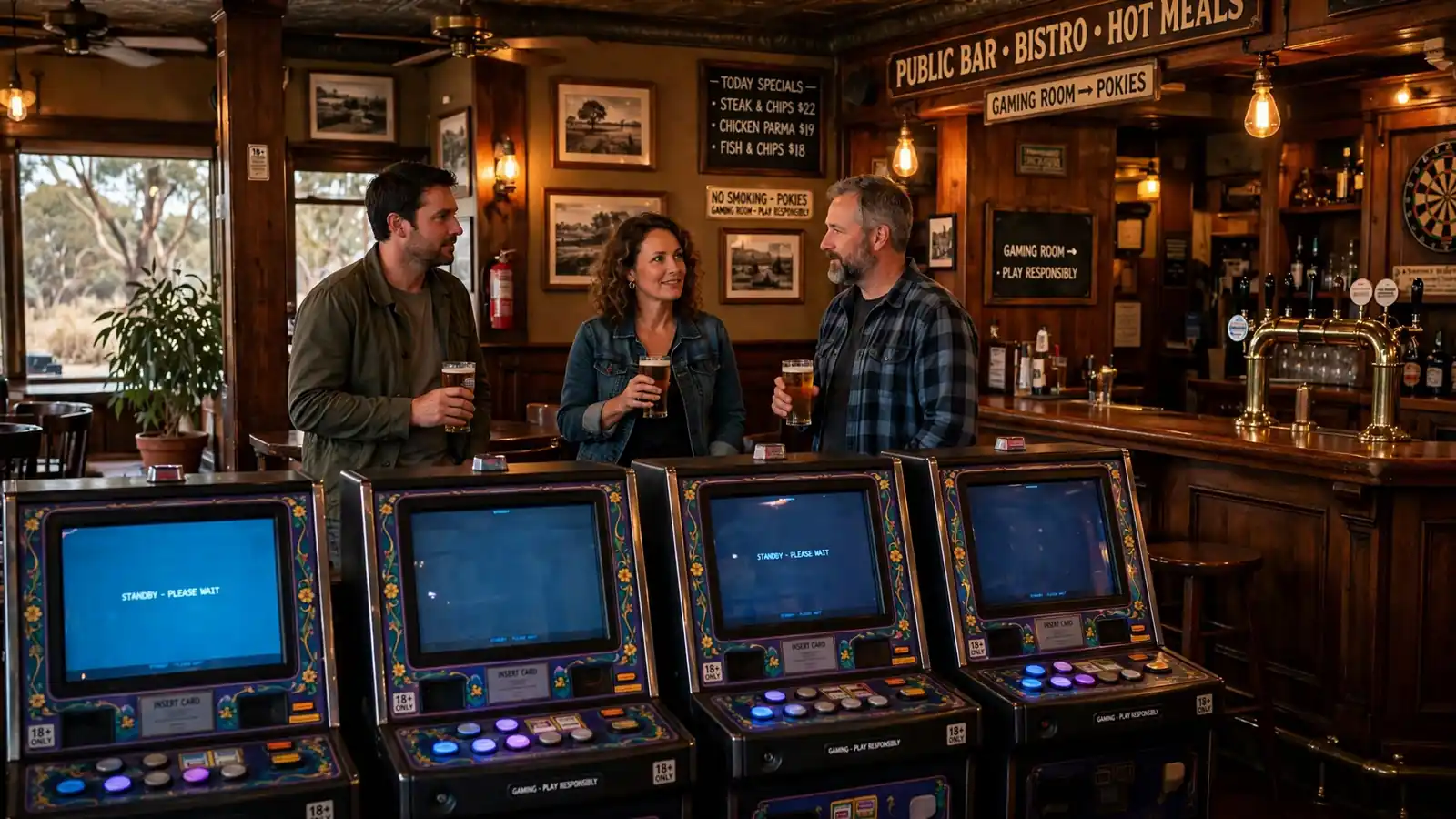
When you’re comparing pokies, return to player (RTP) is one of the figures that can look more decisive than it really is. It describes a game’s theoretical return across a very large number of plays, not what you should expect to get back from a particular session. A higher stated RTP may be useful for comparing the settings of two games, but it cannot tell you how a run of spins will go.
That distinction matters if you’re trying to work out which pokies pay best in South Australia. A return rate is not a promise attached to your next spin, nor a prediction for an afternoon at a venue. It is a long-run measure. Your own results can be very different, because your session is only a tiny slice of the many plays behind that theoretical figure.
The same title may not mean the same setting
There’s another detail that can get lost when people compare a game by name: the same pokie may be offered with different RTP settings at different casinos. A specialist review reports that some game providers give casinos a choice of settings for a particular game. So recognising a title does not, by itself, establish which return rate applies where you are playing.
Choosing pokies in South Australia means checking the details that matter to you before you play. This list offers a concise starting point for reviewing each option.
-
WinSpirit Casino
- License
- Curacao eGaming OGL/2024/923/0383 (Antillephone N.V.)
- Min. deposit
- A$30
WinSpirit Casino lists a Curacao eGaming licence, OGL/2024/923/0383, issued by Antillephone N.V. Its stated minimum deposit is A$30.
-
Lucky Dreams
- License
- Curacao
- Min. deposit
- A$20 (POLi)
Lucky Dreams lists a Curacao licence and a A$20 minimum deposit via POLi. Check that this deposit method suits you.
-
Bizzo Casino
- License
- Curacao Gaming Control Board (TechSolutions Group N.V.)
Bizzo Casino lists a Curacao Gaming Control Board licence, with TechSolutions Group N.V. named in its licensing details.
-
DragonSlots Casino
- License
- Curacao Gaming Authority (Jumpman Gaming Ltd)
DragonSlots Casino lists a Curacao Gaming Authority licence, with Jumpman Gaming Ltd named in its licensing details.
-
Vegaz Casino
- License
- Curacao OGL/2024/1335/0780
- Min. deposit
- EUR 20
Vegaz Casino lists a Curacao licence, OGL/2024/1335/0780. Its stated minimum deposit is EUR 20.
-
Playfina Casino
- License
- Curacao eGaming (Hollycorn N.V., since 2017)
- Min. deposit
- A$20-30 (depends on the offer)
Playfina Casino lists a Curacao eGaming licence held by Hollycorn N.V. since 2017. Its minimum deposit is A$20–30, depending on the offer.
-
Wild Tokyo
- License
- Curacao
- Payout speed
- crypto 30-60 minutes, fiat 1-5 days
- Min. deposit
- A$10
Wild Tokyo lists a Curacao licence and a A$10 minimum deposit. Its stated payout times are 30–60 minutes for crypto and 1–5 days for fiat.
-
Rollero Casino
- License
- Curacao Gaming Control Board OGL/2023/176/0095 (Hollycorn N.V.)
Rollero Casino lists a Curacao Gaming Control Board licence, OGL/2023/176/0095, held by Hollycorn N.V.
-
LevelUp Casino
- License
- Curacao eGaming OGL/2023/174/0082 (Dama N.V.)
- Min. deposit
- A$15
LevelUp Casino lists a Curacao eGaming licence, OGL/2023/174/0082, held by Dama N.V. Its stated minimum deposit is A$15.
-
Golden Pokies
- License
- Curacao
Golden Pokies lists a Curacao licence. The available details are limited to that licensing information.
If a return figure matters to you, look for information tied to the exact game and the casino offering it. A number quoted in a general discussion, a review of another venue or an old screenshot may not describe the setting in front of you. If you cannot confirm the setting from clear information, treat the figure as unconfirmed rather than assuming it carries across every casino.
That is a more useful check than relying on a game’s reputation. People often talk about a pokie as though it has one fixed personality: this one pays, that one doesn’t. But a title alone does not tell you the applicable RTP setting, and even a confirmed setting does not predict a result. Familiarity is not evidence.
RTP does not forecast a spin
Each spin is generated as a separate random event by a Random Number Generator. The result of the last spin does not make a particular outcome due on the next one. A run of losses does not mean the game owes you a win, and a recent win does not make another one more likely simply because it happened.
This is where RTP can be misunderstood. A long-run return figure describes what the game is designed to average over extensive play, not a schedule of payments. It does not mean that a set share of your stake will come back during your visit, or that the game will balance your results before you leave. The number speaks to the game’s statistical behaviour over time; your session can finish well above or below it.
I keep that in mind when someone calls a game “hot” after a win or “cold” after a losing stretch. Those labels may describe what the person has just experienced, but they do not reveal what the next spin will do. Random is random. Not a timetable.
A sensible way to compare claims
If you’re weighing up pokies at a South Australian venue, separate what you can check from what you can’t predict. You can look for an RTP figure that is clearly connected to the exact game and setting. You can also notice whether a claim gives enough detail to identify what it refers to. A broad statement that a pokie is among the best paying in South Australia is not very informative on its own.
What you cannot usefully infer is that a higher RTP will produce a win for you, that a particular machine is ready to pay, or that another player’s recent outcome signals your chances. Those are claims about individual results, and the return rate does not supply that information.
It is also worth keeping the comparison in proportion. RTP is one measure, not a promise of value or a personal forecast. If the setting is unclear, the game name and a confident-sounding claim do not fill in the gap. And if the setting is clear, the figure still cannot remove the uncertainty of individual spins.
Do
- Verify the return setting for the exact game and venue
- Treat RTP as a long-run statistical average
- Confirm information from clear, official sources
Don't
- Assume a game title guarantees a specific RTP
- Use RTP to predict the outcome of a single spin
- Rely on a game's general reputation or past results
For anyone comparing South Australia casino pokies, the practical takeaway is straightforward: verify what return setting a figure refers to, and read it as a long-run measure only. Don’t treat a familiar title, a past result or a bold “best paying” description as a guide to what happens next. A rate can help describe a game; it cannot call the next spin.
Checking Whether a Venue Is Open Before You Go
“Open now” sounds straightforward, but it can mean different things depending on what you want to do. A venue may be open for food, drinks or another service while its pokies area is unavailable. The reverse can also be possible: the venue’s general listing may not explain the hours for every part of the premises. Before setting out, check the hours for the specific service you plan to use.
I wouldn’t treat a map listing or a search result as the final word. Those can be useful for finding a phone number or a venue’s own page, but the hours shown may be incomplete or out of date. If you’re making the trip mainly to play pokies, contact the venue directly and ask whether the machines are operating at the time you intend to arrive. That small check can save you a wasted outing.
Ask about the machines, not just the venue
When you call, be precise. “Are you open?” may get you an answer about the premises as a whole. Instead, ask whether the gaming area is available then, and whether there are any changes to its hours that day. If the staff member gives you a general answer, clarify that you mean the pokies specifically.
This matters most when your plans depend on an early start or a late visit. A venue’s posted opening hours do not, by themselves, confirm that its gaming machines operate for the whole period. Nor does a phrase such as “open all day” necessarily tell you which services are available throughout that time. Get the answer in plain terms before you leave.
If nobody answers, look for a current notice on the venue’s own website or social page, then consider trying again closer to your visit. An old post or a third-party directory can still appear prominently even after arrangements change. Don’t read silence as confirmation.
Check the date and the day
Hours can vary by day, and special events or temporary changes can affect a particular visit. Check the date you’re going, not just the venue’s usual schedule. If you’re relying on a public holiday or a day with altered trading, ask directly rather than assuming the standard hours apply.
It’s worth checking again if you made the plan well in advance. A screenshot saved earlier is handy as a note, not proof that nothing has changed. The most useful information is the venue’s current confirmation, especially if the visit would be inconvenient to abandon once you arrive.
Keep the question simple: “Will the pokies be operating when I arrive?” If the answer is unclear, ask what time the gaming area opens or closes that day. You’re not asking staff to promise that every machine will be available; you’re checking whether the area is operating at all.
Checking Venue Hours
-
1
Contact the venue
Call the venue directly rather than relying on search engine listings.
-
2
Be specific
Ask specifically if the gaming area is open, not just if the premises are open.
-
3
Clarify details
Confirm the exact opening and closing times for the pokies for that specific day.
Treat “open now” as a live check
A listing marked open now is a clue, not a guarantee. It may reflect general venue hours rather than the gaming area, or it may not yet show a recent change. Check the time zone and the listing’s date where shown, then verify with the venue if timing matters. A current phone answer is more useful than a label that does not explain what is open.
For an early visit, confirm the opening time of the gaming area rather than relying on a venue’s breakfast, café or bar hours. For a late visit, ask whether the pokies remain available until the venue closes or stop earlier. Those are separate details, and it’s reasonable to check both.
I’d also avoid making assumptions based on what another venue does. Opening arrangements at one place don’t establish the hours at another. Even if you have visited before, confirm again when the timing is important; the schedule you remember may no longer apply.
Allow for a change of plan
If the venue confirms the machines will be operating, keep that answer in perspective: it tells you about availability at the time you asked, not a guarantee against a later interruption or change. If you arrive and find the area unavailable, check with staff before deciding what to do next. Don’t let the effort of getting there turn into pressure to stay or spend more than you planned.
A clear check takes less time than guessing. Find the venue’s own contact details, ask specifically about the pokies, and confirm the day and time. That is the practical meaning of checking whether South Australia pokies are open now: verify the gaming area’s current hours, rather than assuming the whole venue’s schedule tells you everything.
Planning a Pokies Stop Near the Airport or CBD
If you are trying to fit a pokies visit around a flight, a CBD appointment or another stop, start with the place you actually need to reach. “Near the airport” can mean different things depending on your route and how far you are willing to travel. A result labelled central may also be less useful if it takes you away from your next destination.
I treat map results as a starting point, not confirmation. A pin can show where a business is, but it does not establish that the venue has pokies, that visitors can use them, or that it suits your plans. Check the venue’s own information and contact it if an important detail is unclear. That small step is less exciting than picking the first nearby result, but it can save a wasted detour.
If you are travelling via the airport
Work out whether a stop fits the journey rather than relying on a broad “airport area” label. Consider where you will be coming from and going next, and check the route between those places and the venue. A location may look close on a map but sit awkwardly for your actual trip.
If you are collecting someone, catching a flight or managing luggage, keep the plan flexible. Do not assume that a venue is inside an airport or connected to its terminals just because it appears in an airport-related result. Verify the address and access details directly, then decide whether the stop is practical. If your schedule is tight, the simplest plan may be to skip the detour.
CBD and central-area planning
For a CBD visit, use the address of your appointment, accommodation or transport point as your reference. “Central” is a broad description, not a promise that a venue is around the corner. Check the full address and route on a map, and allow for the fact that your starting point may change during the day.
The same approach helps when you are looking in northern parts of South Australia or around another named destination. Make sure the place in the result is the one you mean before setting off. Similar place names, state abbreviations and incomplete searches can lead to results in the wrong area. If a result mentions Victoria or Parkes, for instance, verify the state and location rather than assuming it is in South Australia.
Make the stop fit the day
I would keep a short list of possible locations, then check each one against the trip you are already making. Compare the address, the route and whether a visit adds a detour you are comfortable with. Avoid choosing solely because a result uses words such as “near me” or “closest”: those labels depend on your location settings and do not tell you whether the place is right for your plans.
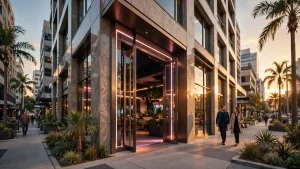
If you are travelling with someone else, agree on the destination before setting off. It is easy for one person to read “CBD” as the city centre and another to assume a particular street or district. A precise address avoids that kind of crossed wire.
Keep the plan practical. Confirm the venue details directly, check the route from your actual starting point and leave room for plans to change. No map label can make a location convenient for every traveller. When the stop no longer fits the day, there is no need to force it.
Online Pokies Searches: The Legal Reality in Australia
It is easy to read an offer for online pokies as if it were a local casino option. In South Australia, that assumption matters. There is no Australian-licensed online casino, and no domestic licence has been issued for real-money online casino games. The Interactive Gambling Act 2001 prohibits companies from supplying those games to people in Australia.
That rule is aimed at operators, not individual players. Australians are not criminally liable simply for playing on an offshore site that accepts them. But that does not make the site Australian-regulated or give you the protections you might expect from a local business. A search for real-money pokies in South Australia can lead to sites operating beyond Australian oversight.
The practical risk is stark: if an offshore casino refuses to pay winnings, you have no legal recourse in Australia to make it pay. A polished website, familiar game names or a promise of quick withdrawals does not change that. Nor does a “no deposit” offer. It is still an offer from an offshore gambling service, not evidence of an Australian-licensed casino.
I would also be wary of claims about the best-paying pokies, high limits or maximum bets. Those phrases can make a site sound like a straightforward comparison, but they do not establish that the operator is authorised to offer real-money play here. An advertised payout or betting ceiling cannot fix the underlying legal position, and it should not be treated as a guarantee of what you will receive.
The same goes for offers that appear to cost nothing upfront. A bonus may carry conditions, and an offshore operator controls the terms it publishes. If a dispute arises, the fact that an offer was displayed or a balance appeared on screen does not give you an Australian route to recover money. Read those claims as marketing, not as a safety net.
For someone in South Australia, “online pokies near me” can be misleading language: online services are not local venues just because they are presented to you on a screen. The relevant point is where the customer is located and what the operator is offering. A site’s overseas location or foreign paperwork does not turn it into an Australian-licensed casino.
There is a difference between understanding the law and endorsing a site. The law places the prohibition on companies providing real-money online casino games to people in Australia; it does not create a local licensing system for online casinos. So there is no Australian online-casino licence you can look for as a reassuring badge. A foreign licence, if a site claims one, is not the same thing.
If you were hoping to compare South Australian online casinos by bonuses, limits or payouts, the basic obstacle comes first: none is licensed here to offer real-money online pokies. Offshore sites may accept Australian players, but if a payment or winnings dispute follows, Australian legal remedies are not available. That is the part worth weighing before any promotional headline.
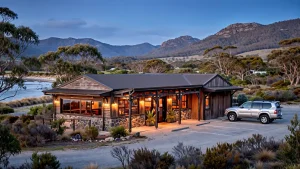
What to Check at a Local Pokies Venue
When you visit a South Australian venue, don’t treat the machines as the only thing worth checking. A useful question is whether staff can explain who handles gambling-related concerns and what happens if a patron appears to be struggling. You’re not asking for anyone’s private information; you’re checking whether there is a clear process.
One report published by regionriverina.com.au describes a requirement for venues with more than 20 gaming machines to have a dedicated responsible gambling officer (RGO) on duty while those machines are operating, beginning on 1 July. It also describes a transition period for venues to make the changes. Because requirements can depend on the rules applying to a venue, ask directly whether an RGO is on duty and how you can speak to them. A vague “someone will help” is less useful than knowing which staff member to approach.
The same report says venues will be required to keep a gambling incident register. The register is intended to capture occurrences, including situations where a patron’s behaviour suggests they may be at risk of, or experiencing, gambling harm. If you want to understand the venue’s safeguards, ask how staff raise a concern and whether incidents are recorded through a formal process. You don’t need to ask to see confidential entries; the practical point is whether staff can describe the procedure.
I’d also pay attention to how easy it is to find help without making a scene. Can staff tell you whom to contact? Do they explain what happens if someone asks for support or a break from gambling? Is the answer consistent when you ask different staff members? Those are straightforward checks, not a test of the venue’s intentions.
- Ask who the dedicated responsible gambling officer (RGO) is
- Confirm how to contact the RGO while machines are operating
- Inquire about the process for recording gambling incidents
- Identify how to access support or a break from gambling
If you are comparing places, keep the comparison grounded in what you can confirm: whether staff can identify the person responsible for gambling-related concerns, explain how incidents are handled, and point you to the venue’s relevant information. Avoid treating a polished sign or a reassuring answer as proof that every safeguard works in practice. Ask calmly and listen for a clear, specific explanation.
For a “best pokies venue” decision, safeguards are only one part of the visit, but they matter more than confident claims. A venue that cannot explain who is responsible or what happens when a concern arises has left you with little to go on. That’s worth noting before you settle in.
Late-Night Searches and Responsible Play
If you are looking for pokies that run around the clock in South Australia, do not assume a venue or its machines are available at every hour. A venue’s general opening time and the hours when pokies can be used are separate things. Check current details with the venue before travelling; late-night plans are a poor time to rely on an old listing or a guess.
That check is about access. Planning your session is a different job. Before you leave, decide how much you are prepared to spend and how long you intend to stay. Treat both as firm stopping points, not targets to stretch if the session is going badly. I find it easier to make those decisions before I am in front of the machines, when the noise and pace are not nudging me to keep going.
Deposit limits, loss limits and session time limits are standard responsible-gambling tools. Where they are available, set them before play and choose levels that fit your own budget and schedule. A limit is useful only if you stick to it. Do not raise it mid-session to chase losses or keep playing longer than planned.
Self-exclusion is another option if you want to block your own access to gambling. BetStop applies to Australian-licensed operators only; it does not bind offshore sites. It is not a substitute for checking what arrangements a particular venue offers, or for getting support if gambling is causing harm.

Late hours can make it easier to lose track of time, especially when you have no clear reason to leave. Arrange your trip home in advance and tell someone you trust when you expect to be back. If you find yourself borrowing, hiding how much you have spent, or breaking limits you set for yourself, pause rather than trying to win the money back.
The point is not to turn a night out into a spreadsheet. It is to make the decision to stop before the session starts, then leave when that decision says to. If you cannot keep to your own limits, taking a break or choosing self-exclusion is a sensible next step. A late finish is still a finish.
Searching for Crown in South Australia
A Crown name attached to a South Australian venue listing can be easy to misread. It does not, by itself, establish that a Crown venue is operating in the state or that it has a pokies room. Treat it as a lead to check, not confirmation of what you will find when you arrive.
Before making plans, confirm the venue’s identity and location through information provided directly by the venue or its operator. Check that the contact details and address belong to the place you intend to visit, rather than relying on a search result, map pin or reposted listing. If the details conflict, pause and verify them independently.
The same care applies if you are trying to find out whether a particular Crown venue has pokies. A brand name, photograph or mention in a directory does not settle that question. Contact the venue directly and ask plainly whether it operates pokies at that location. It is a small check, but it can save a wasted trip.
Claims about the “best” pokies room are harder to assess than a simple location detail. “Best” could mean a particular atmosphere, facilities or range of machines, and a stranger’s description may not match what matters to you. I would separate a personal recommendation from a verifiable detail: first establish that the venue exists and offers what you are looking for, then decide whether it suits your visit.
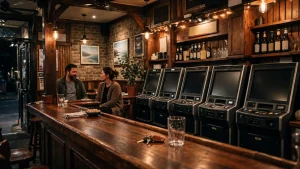
If you are asking about a maximum cash payout, get the answer from the venue before you play. Do not assume that a figure mentioned in a comment or an old post applies to every machine or situation. Ask what payout arrangements apply and whether any conditions affect how a win is paid. Get the explanation from staff, and make sure you understand it before starting. No guesswork.
Keep your notes simple: the venue’s name, its address, who confirmed the information and when. If you cannot get a clear answer, do not treat the Crown label as proof. Search results can point you in a direction; they are not the venue itself. A direct confirmation is the sensible basis for deciding whether to go.
CBD Clubs and the 18+ Rule
A search for pokies at a South Australian club or in a CBD can sound more definite than it is. “Club” may refer to different kinds of venues, and a CBD label says something about an area, not what a particular place offers. Neither description is enough to assume that a club has pokies or that a venue is in the central district. Check the details of the specific place before making plans.
The rule that matters before any gambling visit is clear: you must be at least 18 to gamble in Australia. That applies to pokies as well as other forms of gambling. If you are under 18, you cannot take part, even if the venue is a club or you are visiting with an adult. The setting does not change the age requirement.
If you are close to the age threshold, sort out proof of age before heading out. Venue entry and gambling participation are not quite the same question: a club may have its own entry conditions, while the legal age for gambling remains 18. Check the venue’s stated requirements rather than relying on someone else’s experience or assuming that a club label means anyone can enter.
I would also separate two questions that often get bundled together: “Is this a club?” and “Can I legally gamble here?” A name or category answers neither on its own. Confirm the place’s identity and its own information, then keep the age rule in view. No guesswork needed.
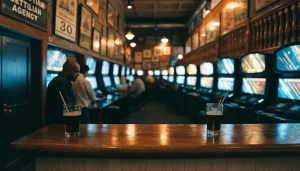
Self-exclusion is another phrase that can come up when people look into pokies in South Australia. It concerns choosing not to gamble, not finding a club or establishing whether you are old enough. If you have excluded yourself, do not treat a venue search as a reason to set that decision aside; pause and use the support arrangements available to you.
For a CBD outing, the practical takeaway is simple: do not infer machine availability from “club” or “CBD”, and do not treat entry as permission to gamble. You need to be 18 or older to gamble. Check the specific venue’s information, and make the age check before the trip—not at the door.
Cashless Payments: What PayID Does and Doesn’t Prove
When you see PayID mentioned in a cashless-payment context, treat it as a way to route a bank transfer, not as a badge of approval. It links a payment to an alias—an email address, mobile number or ABN—rather than requiring you to enter the recipient’s bank details each time.
The system runs through Australia’s New Payments Platform (NPP). Major banks support the platform, and transfers on it use end-to-end encryption. Those details describe the payment infrastructure; they do not tell you whether a gambling service is licensed, whether its games are fair, or whether it will handle a dispute properly.
That distinction matters when you are looking into cashless pokies in South Australia or trying to understand what a payment option at a venue means. A familiar transfer method can make a transaction feel reassuring, but the payment rail and the business receiving money are separate things. PayID availability, on its own, proves nothing about the recipient’s gambling credentials.
I’d keep the same distinction in mind when a page presents PayID as evidence that an online casino is legitimate. In Australia, real-money online casino games are not offered by Australian-licensed casinos; a bank-transfer option does not change that. Nor does it establish that a site’s claims about its games or treatment of customers are trustworthy.
For an in-person visit, ask the venue what cashless payment arrangements it actually offers and what transaction rules apply. Don’t assume that “cashless” means PayID, or that a payment method used elsewhere is available there. For any transfer, confirm the recipient details with your bank before approving it. Simple check, important difference.
So whether you are comparing cashless arrangements around South Australia or have come across a reference to Newcastle, focus on what the payment method can tell you: how a transfer is addressed. It cannot certify the gambling service behind it.
South Australia Pokies and the National Rules
When you’re looking at pokies in South Australia, it helps to separate the rules for local venues from the national rules for interactive gambling. The Interactive Gambling Act 2001 applies across Australia, and the Australian Communications and Media Authority (ACMA) is the primary domestic regulator responsible for enforcing it.
The law concerns what operators may offer to people in Australia. It prohibits companies from providing real-money online casino games, including pokies, to Australians without a domestic licence; no Australian online-casino licences have been issued. That restriction applies in South Australia just as it does elsewhere. A website’s claim that it serves local players does not make its offer lawful.
ACMA can take action against illegal offshore gambling services, including blocking access to sites. Internet service providers must comply with ACMA’s blocklist, so a site may become inaccessible through an Australian connection. Blocking is part of enforcement, not a recommendation to find another way around it. A blocked page is a useful warning to stop and reassess.
The distinction matters if you are comparing land-based pokies with online offers. National interactive-gambling rules do not turn an offshore website into an Australian-licensed casino, and the presence of familiar games or a polished local-facing page does not change who regulates it. For venue-based play, check the relevant local information separately; ACMA’s role here is the national interactive-gambling framework.
I’d treat “best pokies” as a question about the experience and safeguards at a lawful physical venue, not as a reason to trust an online promotion. The regulator’s job is enforcement, not ranking games or certifying a site because it is reachable. Straightforward, but important.
What is the legal age for online gambling in Australia?
You must be 18 or older to gamble, including on online pokies.
Are online pokies legal for Australian players?
You can legally play at offshore sites that accept Australian players, but no Australian-licensed online casino exists. Offering real-money online pokies to Australians without a domestic licence is illegal for operators, and you have no legal recourse in Australia if an offshore casino withholds your winnings.
What does “wagering requirement” actually mean?
It is the amount you must bet before bonus winnings can be withdrawn, usually expressed as a multiple of the bonus. For example, a $500 bonus with a 40x requirement means $20,000 in bets; if the requirement applies to a $500 deposit plus a $500 bonus at 35x, it means $35,000 in bets.
What is the cost-benefit calculation of casino promotions?
Compare the wagering requirement and any cash-out cap with the bonus value: a $500 bonus at 40x requires $20,000 in bets, while a 35x requirement on a $500 deposit plus a $500 bonus requires $35,000. Free spins may also limit how much of your winnings you can withdraw.
What is the minimum PayID deposit?
PayID is treated like other qualifying deposit methods, and most operators set minimum deposits at AU$10–AU$20, though some accept AU$5.