
Separate the Parlour Label from the Licence
The phrase may refer to a gaming-machine venue, but it does not establish that a property is a licensed casino.
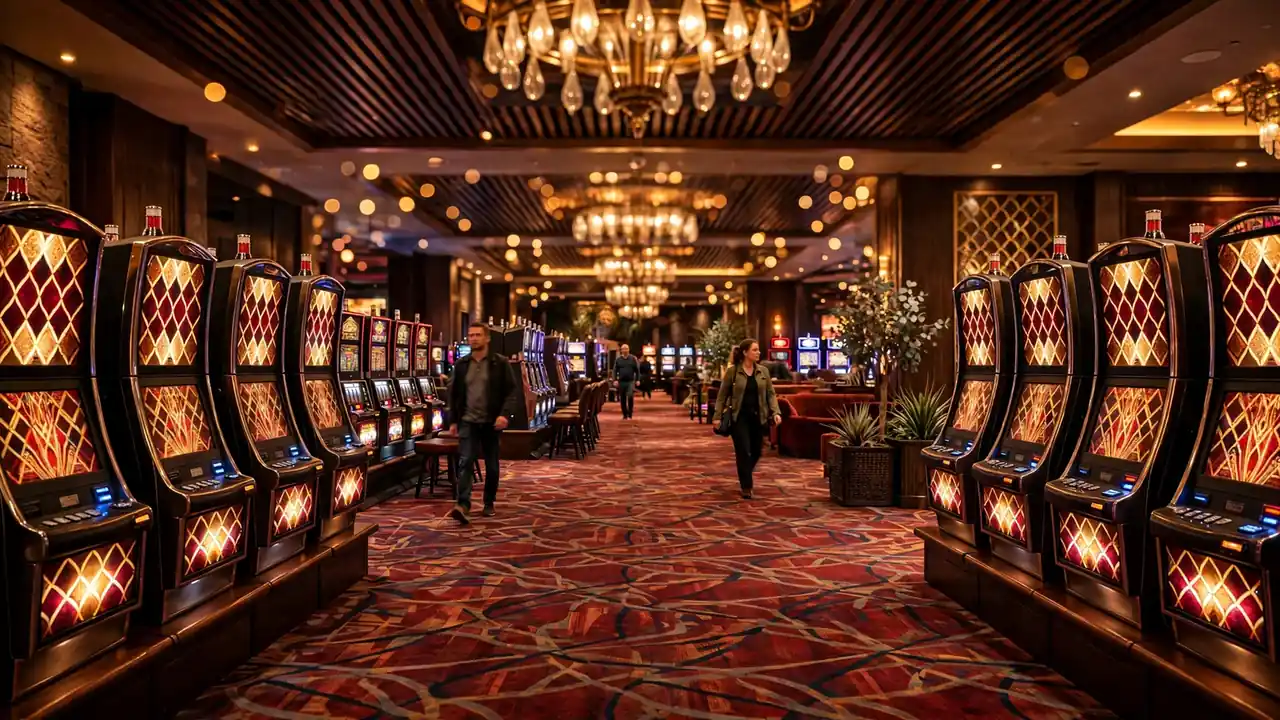
What “Pokies Parlour” Means in Australia
“Pokies parlour” sounds like the name of a particular kind of venue, but in Australia it is safer to read it as an informal description rather than a precise licence category. Someone using the phrase may have a land-based casino in mind, or may simply be looking for a place with gaming machines. The words alone do not identify a specific casino, a separate class of premises or a particular product.
That distinction matters here. Australian casinos are not governed by one national casino licence. Each property operates under a licence issued by the state or territory where it is located, and the casino industry is regulated at that jurisdictional level. So a venue’s status is tied to its location and local licence, not to whether its name or marketing uses the word “parlour”.
If you picture a casino floor when you hear the phrase, that is a reasonable starting point. Just do not treat “pokies parlour” as proof that a venue is a licensed casino. The wording is broad; the licence is the meaningful distinction.
Choosing a pokies parlour-style casino in Australia is easier when you check the available licensing and payment details before signing up. Use these short verdicts as a starting point for deciding what to look into further.
-
WinSpirit Casino
- License
- Curacao eGaming OGL/2024/923/0383 (Antillephone N.V.)
- Min. deposit
- A$30
WinSpirit lists a Curaçao eGaming licence, OGL/2024/923/0383, issued through Antillephone N.V. Its minimum deposit is A$30.
-
Lucky Dreams
- License
- Curacao
- Min. deposit
- A$20 (POLi)
Lucky Dreams lists a Curaçao licence and a minimum deposit of A$20 via POLi.
-
Bizzo Casino
- License
- Curacao Gaming Control Board (TechSolutions Group N.V.)
Bizzo Casino lists the Curaçao Gaming Control Board and identifies TechSolutions Group N.V.
-
DragonSlots Casino
- License
- Curacao Gaming Authority (Jumpman Gaming Ltd)
DragonSlots Casino lists the Curaçao Gaming Authority and identifies Jumpman Gaming Ltd.
-
Vegaz Casino
- License
- Curacao OGL/2024/1335/0780
- Min. deposit
- EUR 20
Vegaz Casino lists Curaçao licence OGL/2024/1335/0780. Its stated minimum deposit is EUR 20.
-
Playfina Casino
- License
- Curacao eGaming (Hollycorn N.V., since 2017)
- Min. deposit
- A$20-30 (depends on the offer)
Playfina lists a Curaçao eGaming licence through Hollycorn N.V., held since 2017. The minimum deposit is A$20–30, depending on the offer.
-
Wild Tokyo
- License
- Curacao
- Payout speed
- crypto 30-60 minutes, fiat 1-5 days
- Min. deposit
- A$10
Wild Tokyo lists a Curaçao licence and a minimum deposit of A$10. Its stated payout times are 30–60 minutes for crypto and 1–5 days for fiat.
-
Rollero Casino
- License
- Curacao Gaming Control Board OGL/2023/176/0095 (Hollycorn N.V.)
Rollero Casino lists Curaçao Gaming Control Board licence OGL/2023/176/0095 through Hollycorn N.V.
-
LevelUp Casino
- License
- Curacao eGaming OGL/2023/174/0082 (Dama N.V.)
- Min. deposit
- A$15
LevelUp Casino lists Curaçao eGaming licence OGL/2023/174/0082 through Dama N.V. Its minimum deposit is A$15.
-
Golden Pokies
- License
- Curacao
Golden Pokies lists a Curaçao licence; no further operator details are provided here.
What the phrase points to
“Pokies” is familiar Australian shorthand for gaming machines. “Parlour” can suggest a dedicated room or venue, but joined together the terms still do not establish that a separately licensed “pokies parlour” category exists. In practice, the phrase may be used loosely for a gaming area or for a venue someone associates with machine play.
The national casino picture is more specific than the phrase. A specialist review puts the number of full-scale casinos at more than twenty, with properties spread across all eight states. Treat that as a figure reported by that kind of review, not as a permanent count: venues and the sector can change, and the wording does not turn an informal label into an official venue type.
There is also a useful distinction between the number of casinos and the number of machines. The total recorded for gaming machines endorsed on venue licences and installed in Australian casinos is 3,308. That figure describes machines within the casino context; it is not a count of casinos, and it does not mean every venue has the same layout or machine offering. A count is a count. It cannot tell you what a particular floor looks like.
Licences, opening hours and age
The local-jurisdiction licence is the key feature of a land-based casino in Australia. It places the property within the regulatory framework of its state or territory. When you are trying to understand what a venue is, its location and licensed status say more than a loose description such as “parlour”. The term may help explain what somebody is looking for, but it is not a substitute for identifying the venue.
Opening hours can also make the phrase sound more specific than it is. All major Australian casinos operate around the clock. That does not mean “pokies parlour” is the name of a particular late-night format; it simply means the major casino venues are open 24 hours a day. The phrase does not tell you which property is meant or what its particular arrangements are.
The minimum age for casino entry is 18 across Australia. That is the national threshold for entry to casinos, rather than an age implied by the word “parlour”. If you are planning a visit, keep the venue itself in view: the general rule is clear, while the search phrase is not an entry pass or an identification of a particular place.
I would keep those points together: the phrase is informal, licences belong to local jurisdictions, major casinos are open all day and night, and casino entry starts at 18. Each fact answers a different question. None makes the term “pokies parlour” a formal nationwide label.
A practical way to read it
When you come across the expression, first ask what kind of place the writer appears to mean. If the context is a casino visit, it may refer loosely to a casino or its gaming floor. If there is no venue named, the words do not tell you where the place is, who licenses it or whether it is a casino at all.
That is where people can slip: a familiar phrase feels like a category, even when it is only a description. Australian casinos have identifiable licences issued in their own jurisdictions. The label “parlour” does not replace that structure.
So, in an Australian land-based context, understand “pokies parlour” as casual wording that may point toward casino gaming machines or a casino venue. For the actual market picture, look to the licensed property, its jurisdiction and the basic entry conditions—not to the phrase on its own. The label is loose. The licence is not.
Bonus and Sign-Up Searches: Read the Offer Carefully
A sign-up bonus sounds straightforward: register, then receive something in return. A “no-deposit” label suggests that a payment is not required first. But those phrases are claims, not proof that an offer exists, that it is available to you, or that it works as the wording implies.
That distinction matters with searches linking a pokies parlour to a sign-up reward or a no-deposit bonus. The phrase does not identify a particular venue or establish whether the page is about a physical casino, an online service or a third-party listing. I would not treat a headline or search-result snippet as confirmation of an Australian casino offer.

What the labels imply—and what they leave out
A sign-up claim raises basic questions: what action is meant by “signing up”, who is said to qualify, and what exactly is being offered? The label alone answers none of them. It does not tell you whether the claim concerns a cash amount, a promotional credit, or something else. Nor does it establish that the stated benefit is available to Australian readers.
“No deposit” is narrower in wording but still not a complete explanation. It implies that a deposit is not required before some stated benefit is credited. It does not, by itself, tell you whether the benefit can be withdrawn, whether further requirements apply, or whether the page is current. Those are not small details. They determine what the claim actually means.
A deposit-related bonus makes a different implication: some payment may be tied to the advertised benefit. That wording alone still cannot establish the amount, eligibility rules or conditions. Don’t fill those gaps with assumptions borrowed from another offer. Similar labels can sit above very different claims.
Registration is not the same as a verified offer
A registration form, an account prompt or a promotional headline does not prove that a bonus will be provided. A page may be outdated, may describe an offer for a different audience, or may repeat wording without confirming the underlying terms. Even a detailed-looking description needs to be understood in context; polished copy is not evidence of Australian authorisation.
There is a more important boundary here. Under the Interactive Gambling Act 2001, operators cannot provide real-money online casino games—including slots, poker and table games—to people in Australia. Advertising real-money online casino services to Australian audiences is also prohibited. So a sign-up or deposit claim attached to an online casino service should not be read as an invitation to participate or as proof that the service is lawful for Australians.
That applies whether the wording says “no deposit”, “welcome” or simply “sign up”. Changing the label does not change the legal status of the underlying service. A page being visible or offering an account form does not establish that it is an Australian-licensed online casino.
A practical way to interpret the wording
When you encounter these claims, separate what the words suggest from what they prove:
- “Sign-up” suggests a connection to registration; it does not confirm eligibility or receipt of a benefit.
- “No deposit” suggests no payment is needed beforehand; it does not explain whether the claimed credit has usable or withdrawable value.
- “Deposit bonus” suggests a payment may be linked to the claim; it does not disclose the full terms.
- “Pokies parlour” does not, on its own, tell you whether the page describes a physical venue or an online service.
Those distinctions stop a headline doing too much work. If the wording is vague, the honest conclusion is that the offer remains unclear—not that you should assume the most favourable interpretation. And where the claim promotes real-money online casino play to Australians, the issue is not merely whether the bonus terms are attractive. The service itself is prohibited. That’s the line.
Online Play Searches and the ACMA Warning Signs
A result that looks like an Australian casino does not tell you whether its online games may legally be offered here. The same goes for a site that loads, lets you create an account or appears under a different web address. Those are signs of access, not proof of Australian authorisation.
That distinction matters because Australia’s rules for online casino games are not the same as the rules for land-based venues. Under the Interactive Gambling Act 2001, operators cannot provide real-money online casino games to people in Australia. That covers casino-style games such as slots, poker, blackjack and roulette. A foreign licence, familiar branding or Australian-facing page does not change that position.

I’d treat claims like “available to Australian players” with care. They describe what a site says it can do, not whether providing the service complies with Australian law. And a new web address is not a new regulatory status. A domain can change while the underlying service remains the same.
What ACMA does
The Australian Communications and Media Authority, or ACMA, is the federal regulator responsible for enforcing the Interactive Gambling Act and monitoring compliance with federal interactive gambling laws. Where a service provides prohibited gambling or advertises it in Australia, ACMA can investigate and take enforcement action. It can also ask Australian internet service providers to block access to a website.
That means a page may stop resolving through an Australian provider, while another address associated with the service may still appear. Neither outcome settles the legal question. A blocked address does not, by itself, tell you everything about the operator; an accessible one does not make the service lawful.
ACMA says it has blocked more than 1,455 illegal gambling and affiliate websites following enforcement actions since November 2019. The reported number of illegal services that have withdrawn from the Australian market since enforcement began in 2017 is not consistent: one figure says more than 210, while another says over 190. Those figures should not be blended into a single precise count.
The scale of blocking is worth understanding, but it is not a checklist for judging an individual site. A service not appearing in a remembered list is not evidence that it is permitted. Nor does a search result, a working sign-in page or an alternate domain amount to approval from ACMA.
Read the access signs correctly
If you come across an online casino page while looking for a physical pokies venue, keep the two contexts separate. A casino with a licensed Australian premises is not thereby authorised to offer its casino games online to people in Australia. The venue and the online service are different things.
The practical warning sign is not simply that a page is hard to reach, nor that it has moved. The important point is that access and legality are separate questions. ACMA’s blocking powers exist because prohibited services and their advertising can be available online, and enforcement can change which addresses resolve for Australian users.
So when an online result presents itself as a local option, don’t read its location, branding or technical accessibility as proof that it is licensed to serve Australians. In this market, that inference gets the law backwards.
Free Chips and Spins: What the Search Term Can’t Confirm
“Free chips,” “free spins” and “free play” sound like clear offers, but the words alone establish very little. They do not tell you who is making the claim, whether it refers to an online service or something else, or whether Australian customers can lawfully access it. A familiar phrase is not proof of a real, available promotion.
The wording can also blur important differences. “Free play” might describe a demonstration with no cash value, a promotional claim attached to gambling, or a feature described without enough detail to tell which. “Chips” may be used loosely in casino language; it does not confirm that a particular venue or service provides a chip-based offer. And a mention of spins does not identify a verified game or explain what the offer would involve.
That distinction matters in Australia. The Interactive Gambling Act 2001 prohibits operators from providing real-money online casino games, including slots, to people in Australia. Advertising real-money online casinos to Australian audiences is also prohibited. So a page using “free” to attract attention should not be treated as evidence that an online casino offer is lawful, available here or endorsed by an Australian regulator. “Free” is not a regulatory category. It is a word.
Nor does the wording reveal the practical conditions behind a claim. It cannot establish whether an offer is limited to a particular audience, tied to other activity, restricted to certain games, or subject to rules about withdrawing any resulting balance. Those are examples of details that would need reliable confirmation; they are not claims that any such offer exists. Without clear, verifiable terms, you cannot tell what the headline would mean in practice.
Do
- Verify the identity of the service provider
- Check for clear and verifiable terms
- Treat vague claims as unconfirmed
Don't
- Provide personal details based on a headline
- Assume "free" means a lawful local offer
- Create accounts on unverified platforms
I would treat a striking free-play claim as a prompt to pause, not as a reason to create an account or provide personal or payment details. Look at who published it and whether the page identifies the actual service behind the wording. A copied headline, a banner or a page that uses “free” repeatedly does not answer those questions. Neither does a page’s ability to load: access alone says nothing about Australian licensing or legal status.
The same caution applies if the wording appears beside Australian casino terminology. A phrase that sounds local does not show that it relates to a licensed Australian offer, and it does not turn prohibited online casino promotion into an authorised service. Keep the claim separate from what is established: the words describe an apparent free-play angle, not a verified benefit.
If the details remain vague, the sensible conclusion is modest: you have seen a claim, not confirmation. Don’t infer an available promotion, a genuine free balance or a safe way to play from the headline alone. A free-sounding label can leave the important questions unanswered. A small word, a large gap.
How to Read a Pokies Parlour Review
A review can be useful without being proof. I read it as a set of claims to test, not as a verdict to borrow. The first thing I want to know is what the writer actually reviewed: a physical casino, a website, a particular service, or simply a phrase used in a headline. Those are not interchangeable. If the subject stays vague, the conclusions will be vague too.

Look for details that could be checked. A review of a physical venue should identify the place clearly and distinguish its own observations from general information. Australian casinos operate under licences issued by their state or territory, so a claim about a venue’s status should say which property and jurisdiction it means. A broad statement that something is “official” or “trusted” does little on its own.
Practical claims need the same care. Major Australian casinos operate around the clock, and the minimum casino entry age is 18 nationwide. Valid photo identification is required to enter major casinos. If a review says otherwise, or treats entry rules as identical for every part of a complex, pause and look for a clear explanation. A confident tone is not a substitute for a precise claim.
I also separate what the reviewer observed from what they inferred. “The venue was open when I visited” is a limited account of an experience. “It is always open” is a broader claim and needs stronger support. A review should make clear when it was written and whether its details have been updated; opening arrangements, venue information and online pages can change. Without that context, even accurate details can become stale.
Watch how the review handles evidence. Does it name the venue and explain the basis for its statements, or rely on generic praise? Does it distinguish fact from opinion? Does it mention uncertainty where the evidence is limited? Specific, restrained writing is more useful than a string of superlatives. A polished page can still be thin on substance.
The same test applies to negative claims. A complaint may describe one person’s experience, but it does not automatically establish a general pattern. Look for the particular event being described, what the reviewer knows first-hand, and what remains interpretation. If a page makes sweeping claims but gives no concrete basis, treat those claims cautiously rather than filling in the gaps yourself.
Finally, keep the review’s subject in view. A description of a land-based venue cannot establish the status or quality of an unrelated website that uses similar wording. Nor does a page calling itself a review prove that its claims have been independently checked. I’d rather leave a question unanswered than turn a label into evidence. Small distinction. Big difference.
Where Australian Casino Gambling Is Concentrated
Australia’s casino map is spread across the country rather than centred on one city. A specialist gambling-industry review counts gambling activity in 147 Australian cities. Treat that as a snapshot from a particular review, not a permanent national total: locations and the way they are classified can change.
The same kind of review identifies Sydney, New South Wales, as the country’s largest gambling city, listing 11 gambling facilities there. That figure gives you a sense of the concentration in the biggest market, but it does not mean every facility is a casino or that each has the same role. City-level counts are useful for orientation; they are not a substitute for checking what a specific venue actually is.
The Northern Territory gives a different picture. A specialist review lists three casinos across three cities in the territory. It identifies Alice Springs as having the most, with one casino. That wording can sound odd when the city’s count is one, but the comparison is within the Northern Territory figures, not against cities across Australia. The review’s count also does not turn Alice Springs into a larger casino market than Sydney.

For a visitor, the practical takeaway is that the national spread and the local picture are two different things. A territory can have venues distributed among several cities while an individual city has only one listed casino. A major city can have a higher facility count without every entry representing the same kind of operation. Keep the unit in view: “gambling facility” and “casino” are not interchangeable labels.
There is another small trap in broad Australian lists: a national number can look more definitive than it is. The 147-city figure comes from a specialist review, as do the city and territory comparisons above. Those are attributed counts, not a live register. If you are planning around a particular place, use the location to narrow things down, then confirm the venue itself and its details directly. A map is a starting point, not a booking plan.
This matters especially when a result puts a familiar city name beside a casino-related label. The regional figures tell you where reported facilities are concentrated; they do not establish that a venue is open, public, or currently operating under the same description. Nor should a city count be read as a ranking of quality. It measures presence in the review’s categories, not what a visitor will find on arrival.
Sydney leads the cited city comparison, while the Northern Territory figures show a more dispersed pattern across its cities. Read both with their source type attached. That is a steadier way to understand Australia’s geography than treating one number as the final word. A useful map, not a verdict.
Sydney, NSW
The country's largest gambling city, listing 11 gambling facilities.
Northern Territory
Casinos are spread across three cities, with Alice Springs having the most (one).
National Scope
Gambling activity is recorded across 147 Australian cities.
Bonus Searches: Don’t Mistake a Keyword for an Offer
A casino bonus is a phrase, not proof that a real offer exists. Seeing it beside “pokies parlour” does not identify a venue, establish who is making the claim, or tell you what any terms might be. I’d treat the wording as a prompt to check what is actually being described, not as a reason to expect a benefit.
Keep the distinction clear: a page can use bonus language without setting out a usable offer. The word alone says nothing about eligibility, conditions, how a benefit would be applied, or whether it is available to you. Those details matter, and guessing at them is no way to make a decision. If they are not clearly stated and attributable to an identified, lawful service, there is nothing solid to rely on.
There is also an important Australian boundary. The Interactive Gambling Act 2001 prohibits operators from providing real-money online casino games to people in Australia, and advertising those services to Australian audiences is banned. So a bonus claim attached to online casino play should not be read as evidence of a lawful local offer. A polished page or confident wording does not change that.
For land-based venues, the general word “bonus” still does not tell you what is available or what conditions apply. A search result may blend venue information with promotional language, or use terms loosely. Don’t fill in the gaps yourself. If the claim does not clearly identify its context and terms, it remains a claim—not a confirmed offer.

I’d also separate broad bonus wording from specific registration or deposit claims. Those are different assertions and should not be bundled together: a general mention of a bonus does not establish that signing up, depositing, or taking any other action would produce one. Nor does it confirm that the claim is current.
The practical takeaway is simple: read the wording literally, and don’t treat the word “bonus” as a promise. For online casino claims, the legal position is the bigger issue; for any other claim, the details and context still need to stand on their own. A keyword is not a contract.
What “VIP Parlour Casino” Does—and Doesn’t—Tell You
The word “VIP” can sound like a promise of a members’ room, a personal host or access beyond the ordinary floor. Paired with “parlour casino”, it may suggest a particular venue or a special way to get in. But the wording alone establishes none of that. It does not identify a verified Australian casino, a membership scheme or an access arrangement.
In Australia, casino entry is governed by the venue’s local rules and licence conditions. The minimum age is 18, and major casinos require valid photo ID. Those are practical entry points; a VIP label is not a substitute for them. Nor does it tell you whether a venue is open to the public, whether membership is required, or what facilities any particular status might include.
Standard Entry Requirements
Regardless of "VIP" labels, the minimum age for casino entry across Australia is 18, and major casinos require valid photo identification.
I would treat the label as a description someone has chosen, not proof of a recognised category. A page using it could be talking about a physical casino, using promotional language, or simply repeating wording that attracts attention. Without a named venue and clear, current details from that venue, you cannot infer a private entrance, priority service, a reserved area or any other privilege. “VIP” is doing a lot of work there.
That distinction matters if you are planning a visit. Confirm the venue’s identity and its own entry information before travelling; do not assume a phrase in a heading grants access or reflects an official membership. If the wording points instead to an online casino, it still does not establish that the service is permitted to provide real-money casino games to people in Australia. Under the Interactive Gambling Act 2001, operators cannot provide those services to customers physically located here.
A status word can imply access. It cannot prove it.
Parlour Pokies and the Physical Casino Context
“Parlour” can make the phrase sound like the name of a particular room, venue type or gaming product. In the physical casino context, it is safer to read it as informal wording for casino gaming machines, rather than assume it identifies a separate kind of place.
The useful distinction is between the label someone uses and what a venue is authorised to operate. In Australia, casino gaming machines sit within a venue’s licensed setting. The national count of machines endorsed on venue licences and installed in casinos is 3,308. That figure gives the phrase a real-world anchor, but it does not describe a single parlour, a particular machine model or a product available under that name.
When I see “parlour” attached to pokies, I’d avoid treating it as proof that a casino has a separately designated parlour area. It may simply be a loose way of referring to the machines on a casino floor. The wording alone tells you little about a venue’s layout or what is offered there.
So, if you are trying to understand a physical venue, focus on its actual casino identity and the licensed gaming-machine context, not on the word “parlour” as if it were a formal category. The count is national, not a guide to the number of machines at any one property. A phrase can be familiar without being precise.
Real-Money Search Results and Changing Domains
A real-money casino result can look straightforward: a page loads, an account area appears, and the site may even accept traffic from Australia. None of that establishes that the operator is authorised to provide online casino games here. I treat access and legal status as separate questions.
Australian internet providers may be required to block access to websites offering prohibited interactive gambling services or advertising them. ACMA’s enforcement information records blocking action against illegal gambling services, including alternate domains associated with Fair Go. Blocking can change which addresses resolve for Australian users, and other addresses may appear later. A working link is not a licence. Neither is a new domain.
That distinction matters because the Interactive Gambling Act 2001 prohibits operators from supplying real-money online casino games to people in Australia. A site’s own claims, a familiar design or an account page cannot override that rule. Nor does a domain change turn a prohibited service into a locally licensed one.
I would not follow a replacement address simply because an older one has stopped opening. It may be presented as a routine technical fix, but the change tells you only that the address has changed or access conditions have shifted. It does not confirm who operates the service, what rules apply, or whether Australians may lawfully be served.
ACMA can investigate and act where an operator provides or advertises prohibited online gambling services. Its blocking actions are part of that enforcement picture, not a directory of approved sites. Keep the distinction plain: a result appearing in a browser is evidence of visibility; a page loading is evidence of access. Neither proves Australian authorisation. A domain is just an address.